-
The regulator's demands for ending the action were excessive, Ocwen claimed.
 January 6
-
With limited plan removals due to the holidays, mortgages in coronavirus-related forbearance rose by 15,000, according to Black Knight.
 January 4
-
A real estate firm focused on gentrifying neighborhoods is showing cracks after a group of its apartment buildings in New York’s Upper West Side and Harlem filed for bankruptcy.
December 30
-
The former property-assessed clean energy program administrator plans to sell off assets via Chapter 11, but PACE securitizations through its bankruptcy-remote trusts will continue to be backed by homeowner ad valorem assessments.
December 29
-
The agency's request for input will shape how mortgages underwritten by Fannie Mae and Freddie Mac handle appraisals and curb risk.
December 29
-
Industry watchers make their wildest guesses (more or less) about developments in real estate finance that could rock the industry in the upcoming months.
December 29
-
Falling interest rates more than canceled out median home listing prices, reaching an all-time time high during the month, Redfin said.
December 24
-
Recipients can’t charge penalties for, or engage in, evictions solely for nonpayment, must provide a written notice of tenant rights, flexibility in repayment and, where applicable, 30-day vacate notices.
 December 24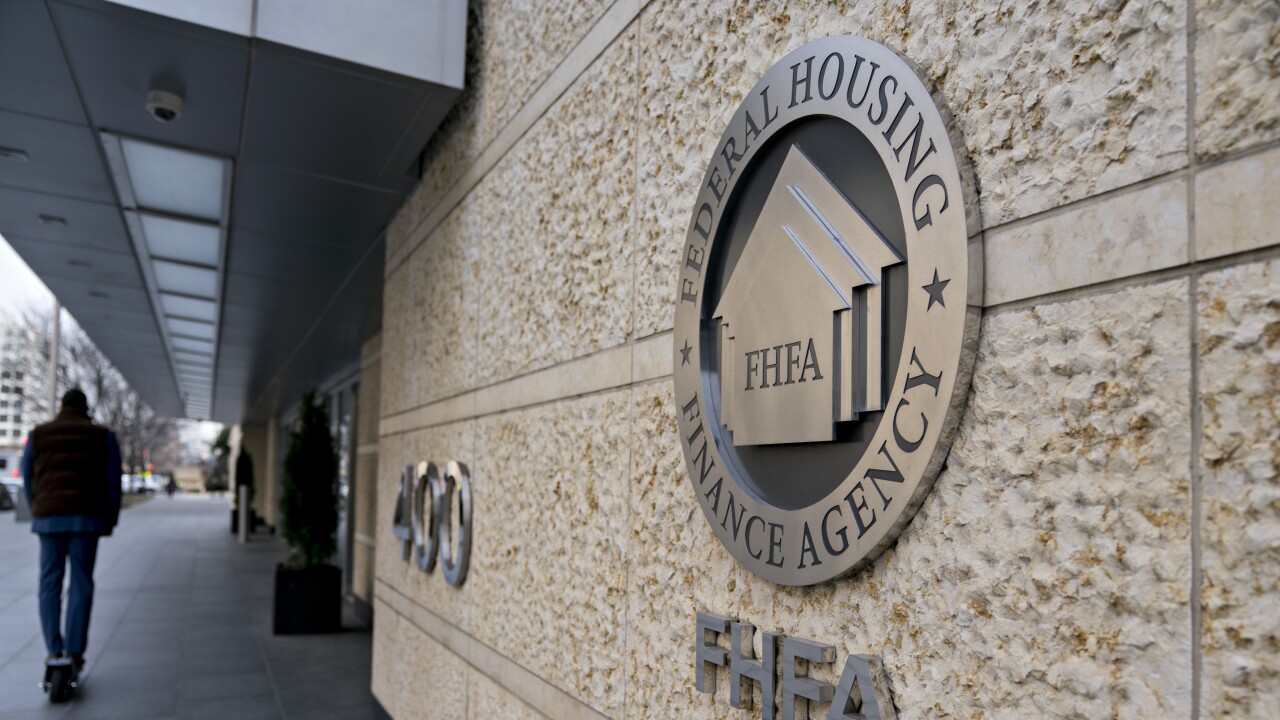
-
Mortgage rates yet again have dropped to a record low, even as the yield on the benchmark 10-year Treasury flirts with breaking back above the 1% mark, according to Freddie Mac.
 December 24
-
The availability of financing hasn’t been an issue to date, but it still could be.
December 23
-
The legislation would let banks postpone the start date of the Current Expected Credit Losses accounting standard and delay categorizing pandemic-related loan modifications as troubled debt restructurings.
 December 23
-
About 4,400 loans started the foreclosure process in November, alongside 176,000 mortgages in active foreclosure.
December 22
-
The company was accused of sending borrowers erroneous loan modification information between 2014 and 2018.
December 21
-
The company expects a good year ahead for mortgage insurers, assuming that rising employment, higher home prices and payment timing deferrals will help them to mitigate risk.
December 18
-
With infection rates rising and unemployment claims increasing since Thanksgiving, mortgages in coronavirus-related forbearance rose by 37,000 last week, according to Black Knight.
December 18
-
The proposal builds on guidance the agency gave to Fannie Mae and Freddie Mac earlier this year.
December 17
-
The percentage of seriously delinquent loans hit 5.8% in the third quarter, up from 1.5% a year earlier but down from 6.8% in the second quarter.
 December 16
- LIBOR
The deadline for inclusion in Ginnie mortgage-backed securities has been extended and an exception will be made for some participations.
December 16
-
The $425 million loan securitization is among two single-asset, commercial-mortgage deals launching this week. Brookfield Asset Management's global real estate arm is also tapping investors to finance an $825 million loan backed by a downtown Manhattan office building.
December 15
-
With coronavirus inoculations underway and government stimulus likely to come, the outlook for next year’s housing market and lending environment grew more optimistic in December.
December 15


