-
The $31 trillion market extended its losses on Friday, pushing yields on 10-year notes up by three basis points — and extending the rise this week to 22 basis points, the biggest such increase since President Donald Trump announced sweeping tariffs on US trading partners.
March 6
-
Key measurements of small businesses' health remained stable in 2025, according to a new study by the 12 regional Federal Reserve banks. But those firms' optimism about the future reached its lowest point since 2020.
 March 3
-
John Velis, Americas macro strategist at BNY, said the US can lean on T-bills to plug that "substantial" gap, helping to explain why the reaction in US Treasuries to Friday's ruling has so far been muted.
February 24
-
The top court's verdict eliminates import taxes that have acted as a restraint on the government's $1.8 trillion budget deficit and the swelling national debt.
February 20
-
Federal Reserve Gov. Lisa Cook said in a speech Wednesday night that the central bank's credibility depends on its ability to bring inflation back to its 2% target.
 February 4
-
Under the framework deal that persuaded Trump to defuse the Greenland crisis, the president would agree to stand by his promise to hold off on fresh tariffs on European products.
January 22
-
The $13 billion auction was awarded at 4.846%, about a basis point lower than its yield in trading just before 1 p.m.
January 21
-
In the U.S. Treasuries market, longer-dated bonds were hit hardest, as 30-year yields climbed 8 basis points to 4.92%.
January 20
-
The twists and turns of the U.S. economy and the artificial-intelligence boom both played a role. But much of it could be traced to the White House.
December 30
-
Yields on 10-year benchmark US government bonds rose as much as four basis points to 4.04%, the highest in more than a week, after negotiators from the world's two biggest economies said they'd struck a series of agreements on issues.
October 27
-
After an apparent truce, the US and China are back to making tit-for-tat trade swipes. Market participants are fretting more about the potential impact on growth than how the protectionist measures will affect inflation.
October 14
-
Federal Reserve Governor Stephan Miran floated the idea of conducting monetary policy with an eye toward the neutral rate and suggested that the president's immigration and fiscal policies will exert downward pressure on inflation.
September 22
-
While Trump's trade war has roiled markets, unnerved foreign governments and provoked criticism from leading economists, S&P affirmed its AA+ rating for the US — a score it's given since 2011.
August 19
-
Federal Reserve Vice Chair for Supervision Michelle Bowman said she foresees three interest rate cuts for this year, a view bolstered by the latest employment data.
August 11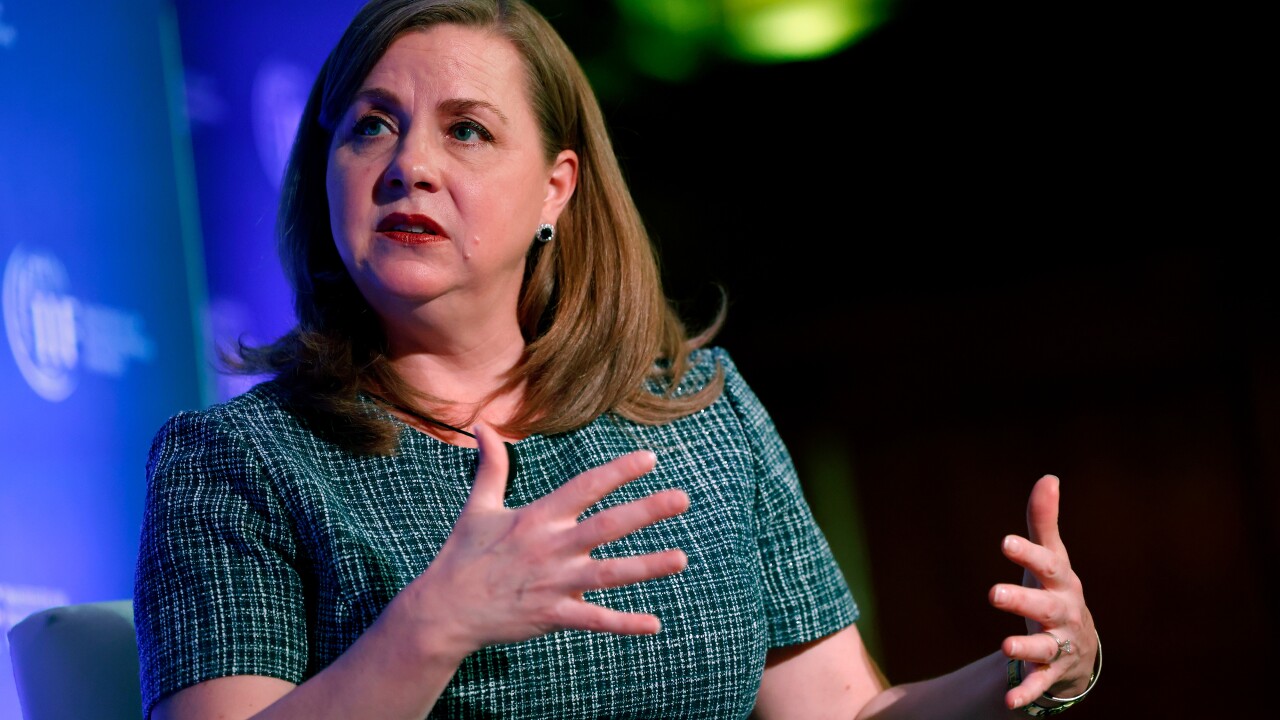
-
Deal's trucking exposure could raise credit challenges as tariffs increase.
August 1
-
President Donald Trump will sign an executive order on Thursday imposing new tariff rates on trading partners that take effect Friday, the White House said.
July 31
-
Federal Reserve Chair Jerome Powell said during his regular press conference Wednesday that the process of determining tariff-related price increases was always going to be slow, but it has taken longer than he expected.
 July 30
-
Portfolio managers are selling default protection at an increasing pace, a signal they see little risk on the horizon. Their position on the main investment-grade U.S. credit-default swap index now amounts to over $105 billion, the most in at least three years, based on data compiled by Barclays Plc and Bloomberg. It's a similar picture in Europe.
July 9
-
The Federal Reserve's preferred measure of inflation moved further from its 2% target, underscoring the central bank's reluctance to cut rates.
 June 27
-
Consumer spending and exports fell slightly in the latest estimate, leading to a downward revision. Imports, which dragged down overall output during the first three months of the year, also came in smaller.
June 26


