-
Federal Reserve Governor Stephen Miran said emerging stresses in housing and private credit markets warrant a reduction to short-term interest rates. While preferring a 50 basis point cut in December, Miran said he would settle for a 25 basis point reduction.
 November 10
-
The Federal Open Market Committee is expected to announce guidance on the end of its quantitative tightening program later Wednesday. As that process draws to a close, experts are questioning when and how the central bank should use its balance sheet to smooth economic stress in the future.
October 29
-
Federal Reserve Governor Stephan Miran said the economic standoff with China could increase market volatility, further necessitating the central bank to move its policy stance to neutral.
October 15
-
Federal Reserve Gov. Michael Barr said in a speech Thursday that he fears the gradual pace of price increases from tariffs being passed on to consumers may prolong the one-time inflationary effect of the tariffs to the point where it affects consumers' inflation expectations.
 October 9
-
Federal Reserve Chair Jerome Powell said in a speech Tuesday that the central bank's policy stance is "modestly restrictive," a stance that will give the central bank flexibility to react to an uncertain economic future.
September 23
-
Federal Reserve Vice Chair for Supervision Michelle Bowman said in a speech Tuesday that steeper interest rate cuts should be on the table if the labor market continues to show signs of decline.
September 23
-
The Federal Open Market Committee's decision to reduce interest rates for the first time in nine months lifted bank stocks Wednesday. The 25-basis-point reduction could lead to net interest income headwinds now, but loan growth later, analysts said.
 September 17
-
Federal Reserve Vice Chair for Supervision Michelle Bowman said she foresees three interest rate cuts for this year, a view bolstered by the latest employment data.
August 11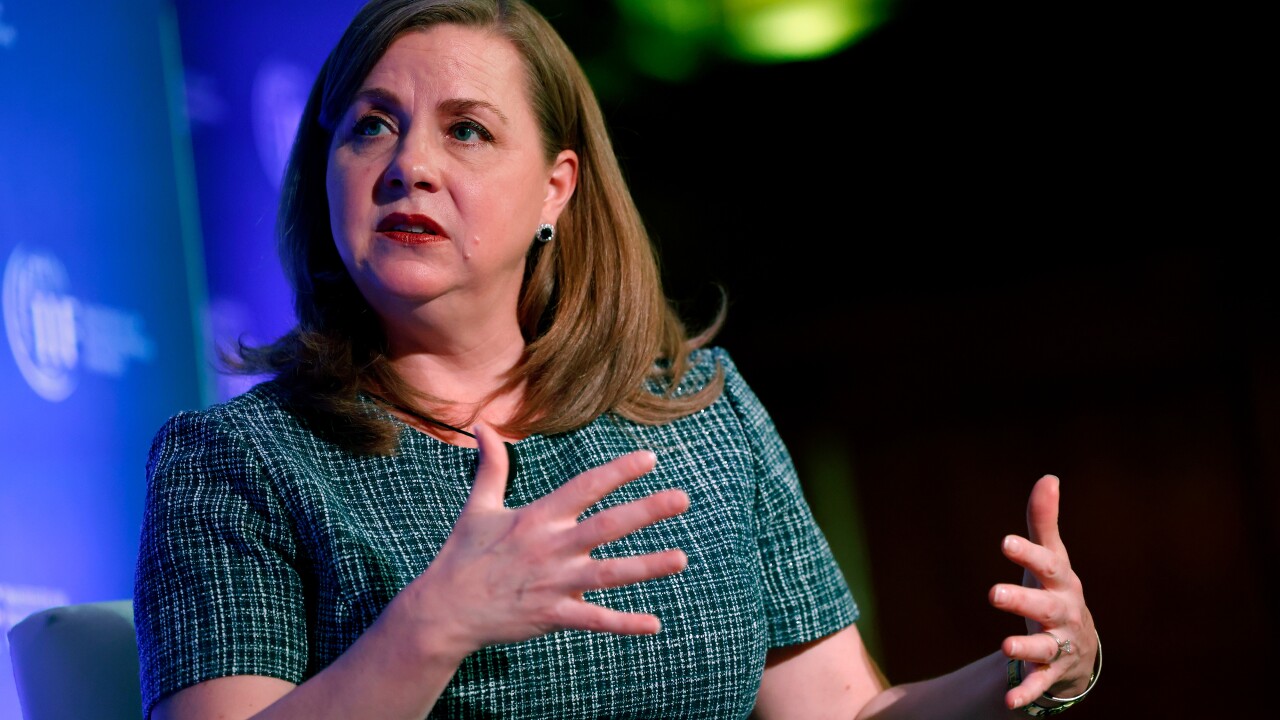
-
Officials are balancing food and retail payroll tax and wage inflation risks against mounting jobs losses and a "subdued" economy that could dampen future price pressures.
August 7
-
President Trump and Senate Banking Committee Chair Tim Scott, R-S.C., visited the Federal Reserve Board headquarters Thursday afternoon to inspect ongoing renovations whose cost overruns have heightened scrutiny of Fed chair Jerome Powell.
July 24
-
Lorie Logan, president of the Federal Reserve Bank of Dallas, said in a speech Wednesday that she is content to leave interest rates where they are, adding that she would want to see inflation fall to 2% before considering cuts.
July 16
-
Historically high interest rates and falling late-payment rates suggest that credit card issuers are tightening their underwriting standards amid economic uncertainty.
 July 11
-
US Treasuries fell for a fifth day as demand for long-term government debt across the globe wanes amid a flurry of bond auctions this week.
July 8
-
New research from the Federal Reserve Banks of New York and San Francisco says markets put the odds of zero interest rates lower today than in the recent past, but economic uncertainty raises the potential for drastic cuts in the "medium to long term."
 July 7
-
Treasuries tumbled after a stronger-than-expected jobs report for June prompted traders to exit bets on an interest-rate cut by the Federal Reserve this month.
July 3
-
Bond yields are shooting up for the second time in as many months. Federal Reserve Gov. Christopher Waller attributes the volatility to concerns about rising national debt levels.
May 22
-
The labor market continues to cool gradually, a sign that businesses facing heightened uncertainty and turmoil didn't significantly alter their hiring plans.
May 2
-
It marked another day of gains in the $29 trillion Treasury market, which has swung throughout April on President Donald Trump's evolving trade policies and uncertainty about the Fed's path.
April 24
-
The French bank foresees CLO growth in U.S. and Europe but cautions wariness around the current administration's potential impacts to inflation and the economy.
February 25
-
The financial data firm Intercontinental Exchange is buying the firm that runs the Ameribor interest rate benchmark, which some community and regional banks back as a LIBOR alternative.
 January 8