

(Bloomberg) -- Treasury yields surged, with 10-year notes recording their worst start to a year in more than a decade, as investors embraced risk despite the pandemic’s tight grip on the economy.
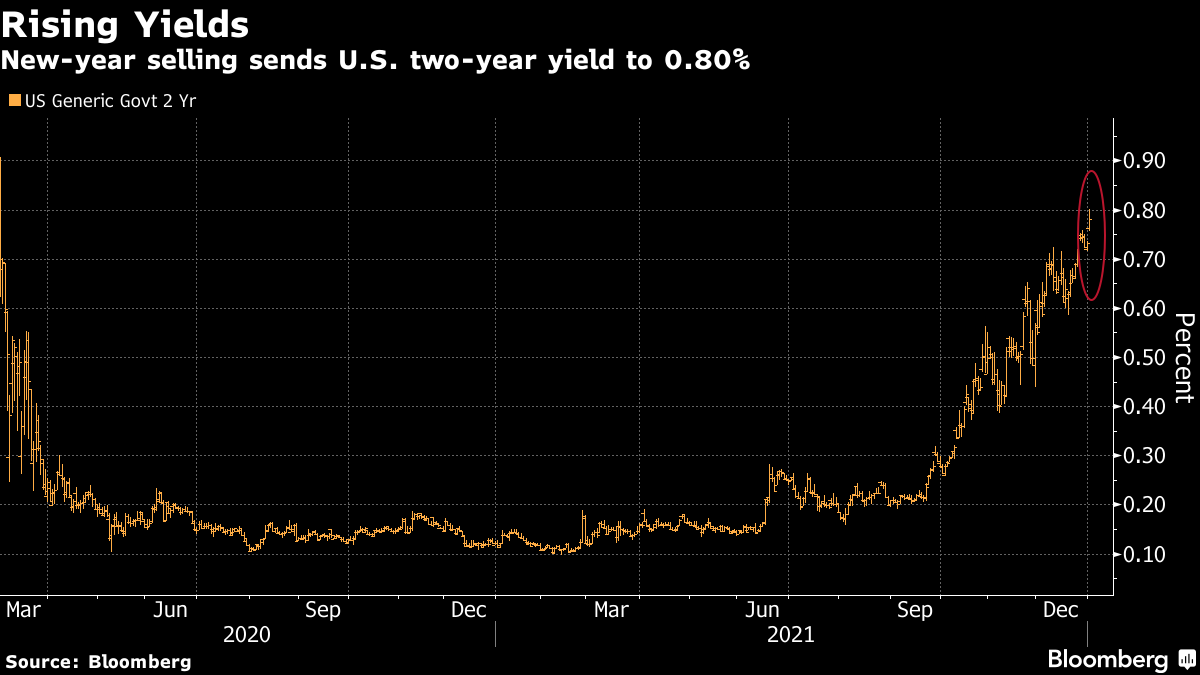
Benchmark yields climbed across the curve, led by the 10-year, rising as much as 12 basis points and exceeding 1.60% for the first time since the omicron variant emerged in late November. It was 10-year yield’s largest first-day jump since 2009, according to Bloomberg data. The yield on the 30-year bond increased as much as 12 basis points to top 2.0%, while the two-year rate surpassed 0.80%, its highest level since March 2020.
In Treasury options, a trade costing more than $16 million appeared to wager that the 10-year yield by mid-February will reach 1.95%, last seen in late 2019. Gains for U.S. stocks from near-record-high levels reinforced expectations for at least three Federal Reserve rate hikes this year, and later this week, December employment data and the minutes of the Federal Reserve’s last policy meeting could build a case for rate hikes starting sooner than May, the current expectation.
“March will be a live meeting and stronger data this week means it is not inconceivable we see lift-off that early,” said Gregory Faranello, head of U.S. rates at AmeriVet Securities. “The move higher in rates is not surprising as the market expects the Fed will lift off this year.”
A bulging calendar of corporate debt sales for which there was little opportunity to prepare last week also was a factor for Treasuries. It was the first primary-market activity following a three-week lull into year-end.
Based on current interest-rate futures prices, the first increase in the fed funds target is estimated for May, with 77 basis points of tightening expected by the end of the year. Strategists surveyed by Bloomberg expect Treasury yields will end 2022 at higher levels, with the two-year climbing to 1.12% and 10-year notes reaching 2.04%.
That outlook raises the prospect of negative Treasury returns for two consecutive years, a performance that would be unprecedented since records began in 1974. The Bloomberg Treasury index provided a total return of minus 2.3% in 2021, its first slump in nominal terms since 2013. The index has in the past rebounded after a down year, with gains ranging between 5.1% and 18% after negative returns in 1994, 1999, 2009 and 2013.
(Updates yield levels throughout.)
More stories like this are available on bloomberg.com
©2022 Bloomberg L.P.


