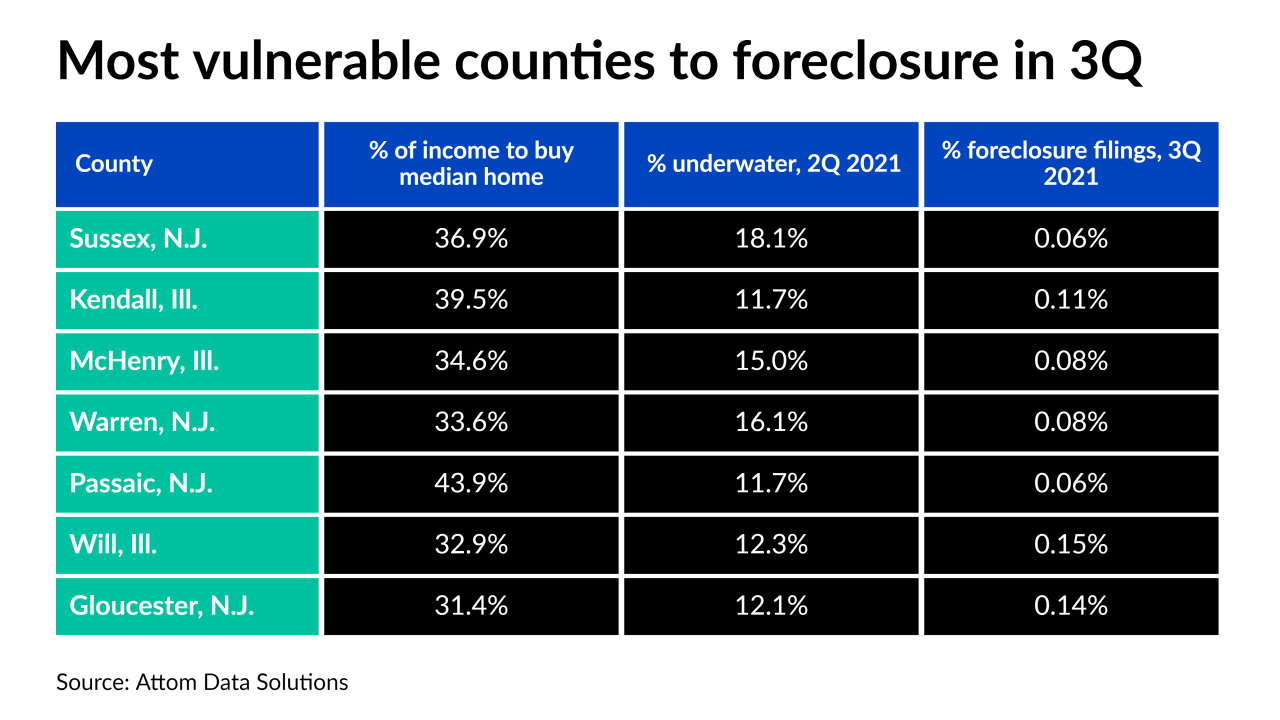
-
Levels of home equity in seriously delinquent loans have fluctuated but today there's still a sufficient amount to help many access foreclosure alternatives, Intercontinental Exchange said.
 December 4
-
But the volume of activity for distressed properties is still lower than the historic norms, Attom Data Solutions said.
 July 13
-
Over one-third of the struggling borrowers who received recast loan terms in the first quarter cut their monthly obligation by 20% or more.
June 26
-
New starts surged 75% compared to a year ago, but repossessions saw their first decline in one-and-a-half years, according to Attom.
 February 14
-
But late borrower payments slightly grew in November, with 18 metro areas reporting an increase, up from six metro areas in October, CoreLogic's report found.
 January 26
-
The measure enacted on Dec. 30, 2022 applies retroactively and could add servicing risks that lending divisions will likely consider in underwriting and pricing on new loans originated in the state.
January 13
-
Three percent of all mortgages were 30 or more days past due on their scheduled payment or in foreclosure in July.
September 29
-
The month ended with 54,000 less properties for which the borrower was at least 30 days or more late on their payments, Black Knight said.
September 23
-
Still near historic low levels, the share of borrowers entering the early stages of delinquency in June increased 0.1 percentage point.
September 13
-
Completions in August remained far lower than before COVID-19 arrived in the United States but initial actions rose fast enough to potentially meet expectations that they'll normalize in 2023.
September 8
-
At the same time, the share of overall vacancies fell due to limited inventory, according to a new Attom report.
August 19
-
Inflation and higher interest rates are hurting distressed borrowers, but low unemployment, remaining forbearance and loss mitigation options are still blunting their impacts, recent loan-performance numbers suggest.
July 18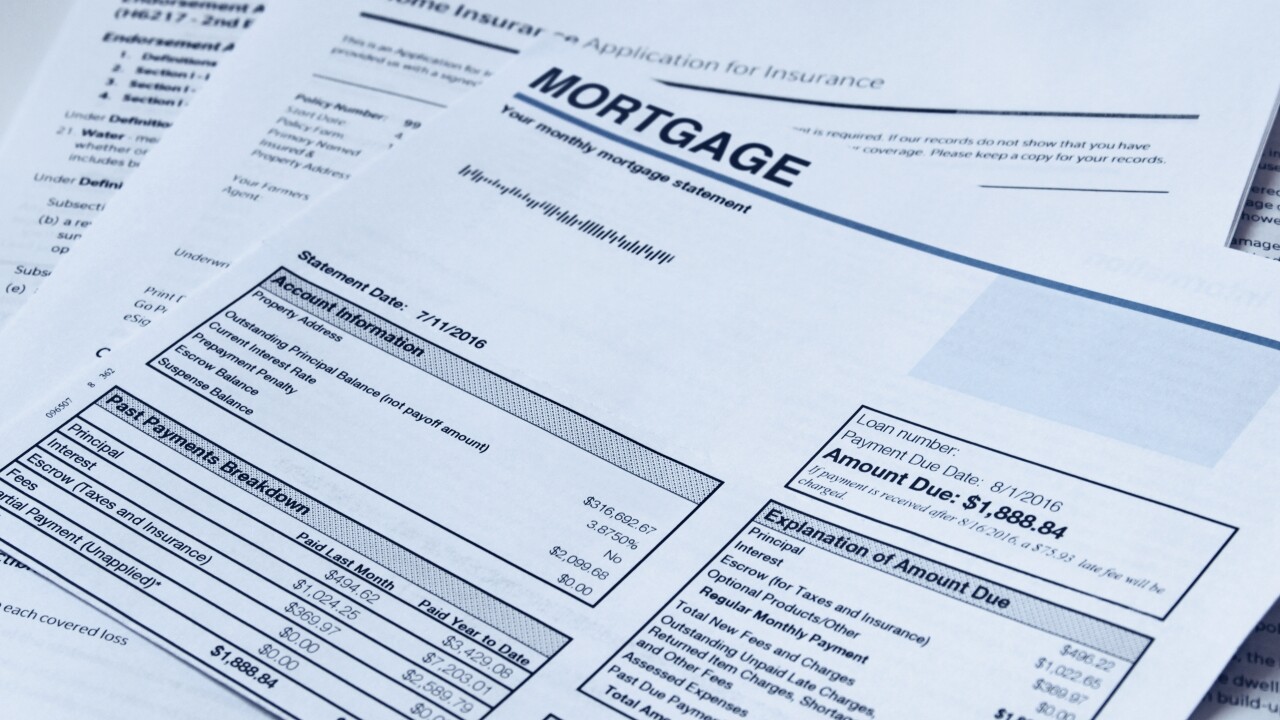
-
The government-sponsored enterprises divested themselves of the largest share of these loans since they first began selling them in 2014, a Federal Housing Finance Agency report found.
July 12
-
But a slower-than-anticipated rate of repossessions suggest distressed homeowners are finding solutions.
June 14 -
Strong general unemployment gains, student loan deferrals and borrowers enjoying low interest rates secured in the refinance boom contributed to the positive gains.
 April 25
-
While smaller in number, initiated foreclosures had a similar consecutive-quarter gain as the market transitioned away from pandemic-related relief that has artificially constrained workout activity.
March 23
-
Meanwhile, 707,104 mortgages remain in forbearance, accounting for a combined $136 billion in unpaid balances.
February 28
-
However, the serious delinquency rate dropped to a point significantly below the market-wide average, and much of the foreclosure activity allowed to proceed did so with new consumer protections in place.
December 22
-
However, the seven institutions in the Office of the Comptroller of the Currency study service 13% fewer loans compared with the third quarter of last year.
December 10
-
Counties in the West faced the least risk from pandemic distress in the third quarter, according to Attom Data Solutions.
 October 21