-
Uncompleted trades involving the 20-year Treasury exceeded $21 billion in the week ended December 25 ... the second-highest amount in the history of the tenor.
January 3
-
The overall price drop was offset by interest payments, allowing a broad gauge of the Treasury market to post a gain of about 0.7% this year through Dec. 30.
December 31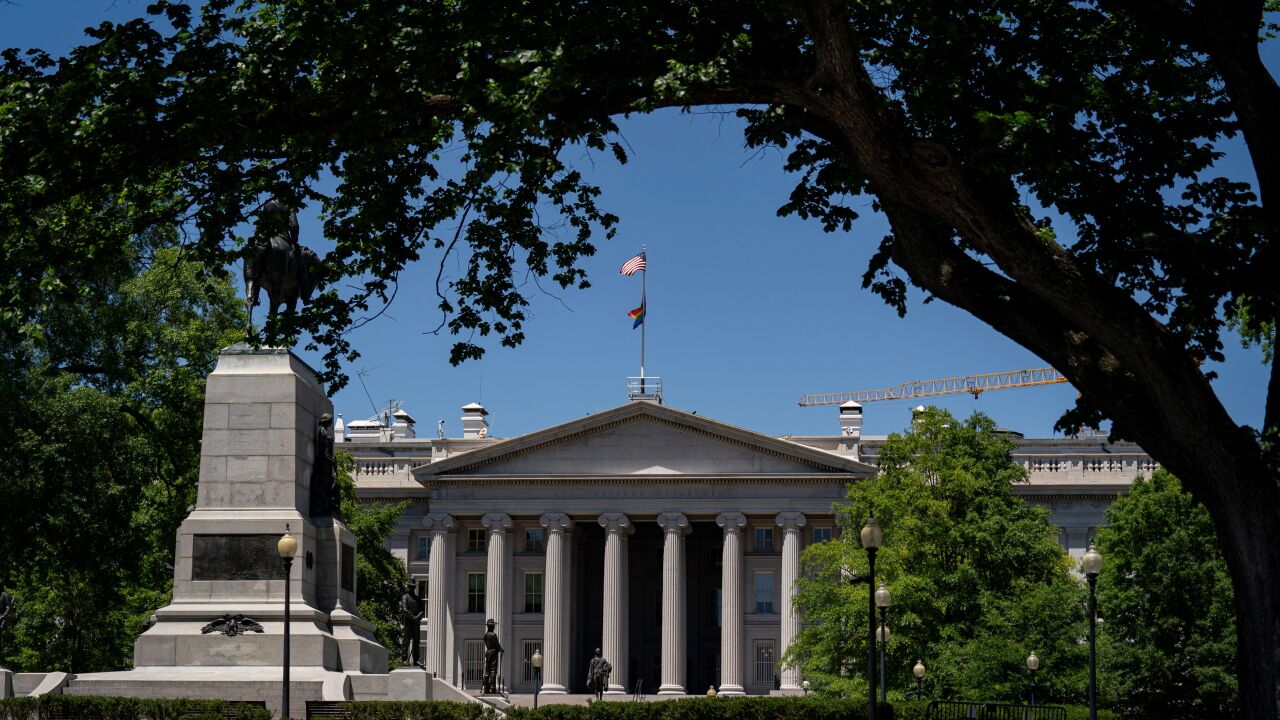
-
Treasury was notified on Dec. 8 by a third-party software provider that a hacker had gained access "to a key used by the vendor to secure a cloud-based service."
December 30
-
Treasury yields remain near the upper end of their trading range for this year given the limited outlook for further interest rate cuts, along with concerns that rates will remain elevated because of the potentially inflationary policies being proposed by President-elect Donald Trump.
December 30
-
Investors have been demanding additional yield compensation, or term premium, for long-term Treasuries amid signs of sticky inflation.
December 27
-
Franklin Templeton Investments Chief Executive Officer Jenny Johnson said she's concerned that some investment- and non-investment-grade private credit assets are trading at the same spreads as traditional fixed-income investments like corporate bonds.
December 10
-
Economic forecasts include the possibility of higher inflation and slower growth that could stall future cuts to the federal fund rates.
 December 5
-
The rally left yields lower by at least three basis points, with short maturities — more sensitive to Fed policy changes — falling the most.
December 4
-
The market retraced an opening selloff, with longer-dated benchmarks outperforming the front end.
December 2
-
The economist, who runs Roubini Macro Associates, is positioning for a curve steepener, a popular Treasuries trade where the gap between long- and short-dated yields widens.
November 27
-
Tuesday's declines lifted yields by one to four basis points across maturities after Trump said he'd impose additional 10% tariffs on goods from China and 25% tariffs on all products from Mexico and Canada.
November 26
-
Donald Trump's presidential victory, stubbornly elevated inflation and a steady drumbeat of strong economic data have pushed 10-year Treasury yields up sharply since mid-September.
November 25
-
Yields on 30-year bonds rose as much as 6 basis points to 4.68%, a level last seen at the end of May.
November 18
-
The benchmark 10-year Treasury yield topped 4.5% for the first time since May after the release of retail sales data including hefty upward revisions.
November 15
-
Treasury yields rose the day after President-elect Donald Trump was picked. The short-term result: It's harder for commercial real estate lenders and borrowers to find common ground.
 November 15
-
Two-year yields — more closely tied to the Fed's decisions than longer-maturity debt — reached the highest level since July, and three- to 30-year yields rose at least 10 basis points.
November 12
-
So-called Trump trades seesawed as investors sought hedges before election day, only to pile back in as the results became clear.
November 8
-
Traders are looking to central bankers for clues on how Trump's tax-cut and tariff policies could alter their outlook for global growth and inflation.
November 7
-
Trump has promised levies on US imports that would upend global trade, tax cuts that would further stretch the federal budget and deportations that could shrink the pool of cheap labor.
November 6
-
The yield on 10-year Treasuries rose as much as five basis points to 4.33%, nearing an over three-month high, with strategists and investors warning of outsized market swings on the results of the vote.
November 5


