-
The much-anticipated proposal, which would not go into effect until after Fannie Mae and Freddie Mac are privatized, reflects Director Mark Calabria’s aggressive efforts to get the companies on a strong financial footing.
May 20
-
Director Mark Calabria, who abandoned the Fannie and Freddie capital proposal written by his predecessor, said he expects a revised framework to be ready “very soon.”
May 19
-
The Federal Housing Finance Agency clarified that borrowers with Fannie Mae- or Freddie Mac-backed mortgages who have entered into forbearance plans can be eligible for a refi or new purchase once they are considered “current” on their mortgage.
May 19
-
The two mortgage giants said they would begin the process of hiring outside firms to help raise capital that will be needed to exit conservatorship.
May 18
-
The agency's announcement came one day after the agency said it would provide borrowers struggling to stay current with an additional payment deferral option.
May 14
-
Eligible borrowers can add the forborne payments to the end of their loan term.
May 13
-
The government-sponsored enterprises have set new temporary limits on mortgage sales while extending processing flexibilities related to COVID-19.
May 6
-
The other parts of the Day 1 Certainty program regarding income and asset verifications remain in effect.
May 6
-
Some benefits are materializing from Fannie Mae's pledge to limit servicers' exposure to principal-and-interest advances the way Freddie Mac does, but counterparties of both GSEs remain exposed to other concerns.
May 6
-
Mortgage lenders have imposed steep pricing adjustments for cash-out refinancing as more borrowers seek forbearance.
May 4
-
The Consumer Financial Protection Bureau's chief operating officer will take a similar position at the Federal Housing Finance Agency, fulfilling one of the multiple recruiting goals the FHFA announced in January.
April 28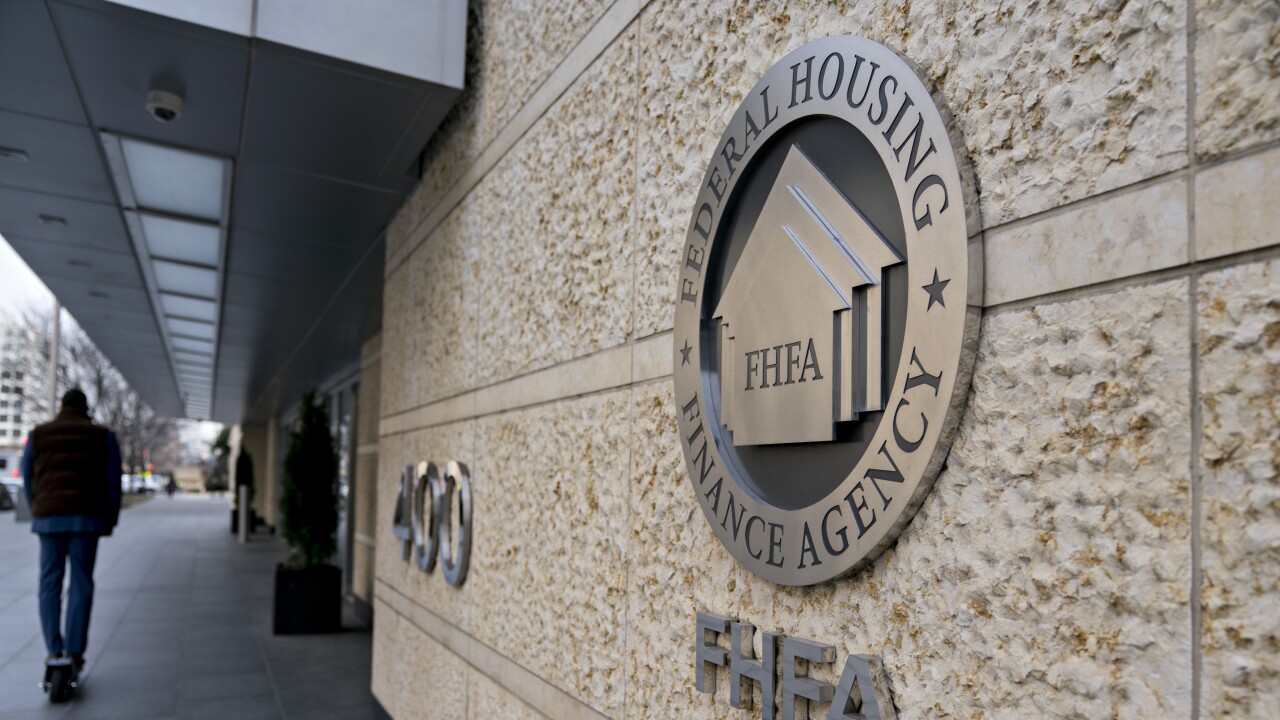
-
Fannie Mae and Freddie Mac are now able to buy loans in forbearance to alleviate pressure on the sector, but the fees charged by the mortgage giants to assume more risk could turn away some originators.
April 28
-
The bipartisan coalition of AGs said homeowners should be allowed to wait until the end of a loan term to make payments they skipped because of the coronavirus.
April 23
-
The policy move will allow small institutions participating in the Paycheck Protection Program to pledge business loans as collateral to obtain advances.
April 23
-
The FHFA will allow Fannie Mae and Freddie Mac, for a limited time, to purchase loans for which the borrower has sought to postpone payments because of the economic effects of the coronavirus.
April 22
-
Efforts to calm lenders’ fears about coronavirus-related forbearance may not offset tightening standards, and the FHA is less likely to boost volume than it was during the financial crisis.
April 21
-
The agency said it is aligning policies for Fannie Mae- and Freddie Mac-backed loans in forbearance so that servicers are only responsible for advancing four months of missed payments.
April 21
-
Federal backing for firms facing a deluge of missed mortgage payments is still on the table despite recent comments by an official who questioned the need to help the industry.
April 20
-
The Borrower Protection Program enables the two agencies to exchange information about loss mitigation efforts and consumer complaints regarding specific servicers.
April 15
-
A bipartisan group of lawmakers wrote in a letter to the Treasury secretary that the Financial Stability Oversight Council should create a liquidity facility to deal with a flood of forbearance requests brought on by the coronavirus pandemic.
April 8


