-
16.6 million former and current Loandepot customers had their data leaked, the lender and servicer announced Monday.
 January 22
-
Also, Wells Fargo, Finance of America entered into partnerships affecting real estate tax and cybersecurity solutions.
 November 17
-
Two federal agencies recently released a warning about a strain of ransomware called Snatch, which has adopted the successful tactics of other variants.
 September 21
-
The FBI, NSA and CISA highlighted the emerging dangers of AI-powered deepfakes in phishing campaigns and cataloged protections companies can deploy.
September 13
-
The customers were affected by an incident involving a Progress Software program used by Sovos Compliance.
 August 31
-
The new rule sets a nationwide standard for disclosing all "material" breaches within four days — much sooner than many state-level disclosure rules.
July 28
-
In a data breach at OpenAI, some ChatGPT users were able to see other users' financial data. In other cases, users have invoked their dead grandmothers to access information that should have been sealed off.
July 17
-
Experts say banks should start stepping up their encryption now, because hackers can steal it now and decrypt it with quantum computing later.
May 22
-
The increases may simply reflect better detection and reporting, but banks continue to facilitate large ransom payments to sanctioned individuals.
November 2
-
The state's disclosure laws generated data that indicated millions of consumers had their personal details potentially compromised.
August 24
-
Pingora Loan Servicing still hasn’t disclosed the full scope of last fall’s hack impacting at least 169,000 customers across four states.
 May 24
-
When the U.S. announced sanctions against Russia two weeks ago, many feared U.S. banks would bear the brunt of a payback cyberattack. Experts disagree on why that hasn't happened and whether the danger has passed.
March 18
-
The bill, part of the omnibus spending package, would force banks and other critical infrastructure providers to tell the government right away when they’ve been breached.
March 11
-
Infrastructure will command most of lawmakers’ attention, but expect banks to keep pushing for bills that would ease the transition away from a key benchmark rate and help them serve legal cannabis businesses.
August 24
-
Some say Equifax, Experian and TransUnion are too slow to investigate grievances, prompting more complaints to the Consumer Financial Protection Bureau. But the big three say other forces are at work.
 April 30
-
As it attempts to craft policy on access to consumers’ financial account information, the agency is wading into a battle between those who want data to flow more freely and those who prioritize security.
November 12
- LIBOR
Federal Reserve Chairman Jerome Powell told senators that the central bank is willing to explore a credit-sensitive interest benchmark in addition to the secured overnight financing rate, which some banks say could cause problems during economic stress.
February 12
-
The agency’s semiannual report warned institutions to be mindful of operational risks from the innovation in core banking systems, and detailed supervisory steps to monitor the adoption of a new reference rate.
 December 9
-
A report from the Financial Stability Oversight Council cited a bigger share of originations and servicing by nonbanks as a potential vulnerability in the financial system.
December 4
-
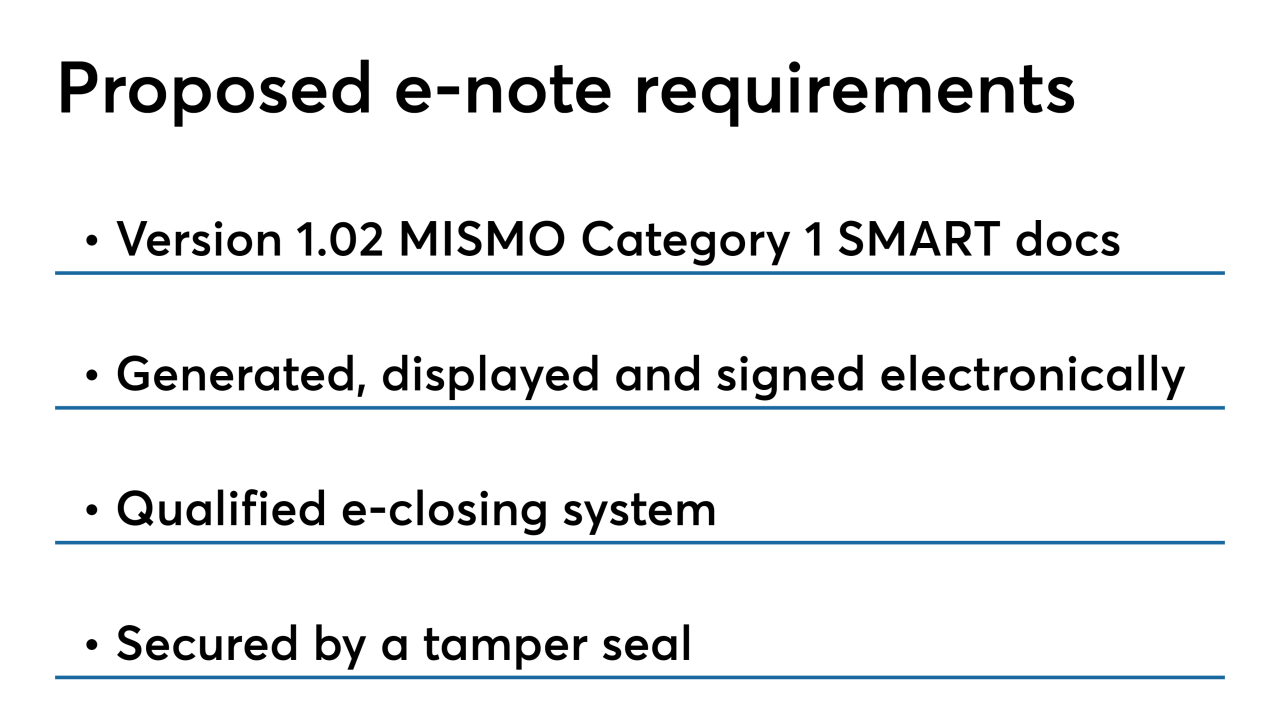
Ginnie Mae is looking for input on its proposed guidelines for electronic promissory notes and other mortgage documents that it plans to test through a digital collateral pilot.
October 28