-
The overall mortgage delinquency rate improved in the third quarter as the economy got healthier while late-stage delinquencies hit a decade high, according to the Mortgage Bankers Association.
 November 11
-
While the overall rate fell in October, S&P noted a sharp rise in the proportion of loans overdue 60 days as many roll out of COVID-19 forbearance.
November 9
-
Defaults have been milder than expected thanks to government relief and stricter underwriting. But with the crisis dragging on and policymakers unable to agree on a stimulus plan, loans to highly indebted companies remain at risk.
October 15
-
While overall mortgage delinquency rates slowly descend, serious delinquencies — especially loans past 120 days due — jumped in July, according to CoreLogic.
October 13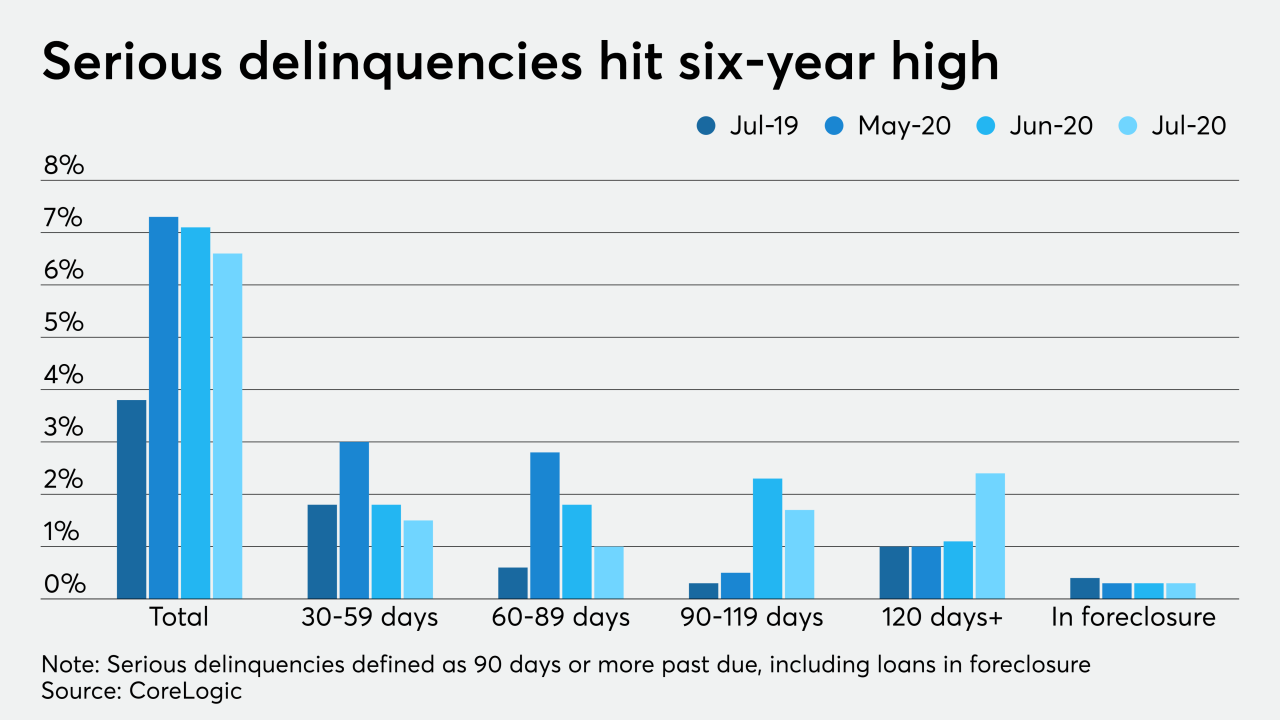
-
The Consumer Financial Protection Bureau's overhaul of its Qualified Mortgage standard is alarming free-market advocates who say it will precipitate a return to easy credit and higher defaults and could disproportionately harm minorities.
 October 8
-
Over 3.6 million borrowers sit in coronavirus-related forbearance with portfolio and private-label securitized loans driving the week's increase, according to Black Knight.
October 2
-
Deals, trends and research in structured finance and asset-backed securities for the week of Sept. 25-Oct. 1
October 1
-
Deals, trends and research in structured finance and asset-backed securities for the week of Sept. 18-24
September 24
-
“The Fed has made it clear that they don’t want a liquidity problem in the Treasury market or the higher-grade corporate market,” Fuss said. “They cannot, unfortunately, underwrite lending in the private markets.”
September 23
-
A new report on bank-held commercial real estate and C&I loans indicates troubled borrowers may be skipping payments on loans they won't be able to refinance or extend over the next year, leading to a potential wave of defaults over the next four to six quarters.
September 15
-
Liberty Lending, Upstart Network and Regional Management Corp. are looking to price bonds backed by pools of unsecured consumer loans, amid market worries about the sectors' potential challenges during the COVID-19 outbreak.
September 14
-
Some of the cures were the result of short-term remedies and could reverse as relief measures end.
 September 10
-
The ratings agency reports that the MPL industry might reckon with a potential spike in defaults as borrowers are rolled out of two- and three-month COVID-19 hardship programs.
September 9
-
Three non-QM deal issuers in August report varying levels of progress in moving borrowers from expired forbearance programs.
August 26
-
As interest rates tumbled throughout July, prepayments climbed to the highest monthly rate since 2004, but 90-days-or-more delinquencies were on the rise from June, according to Black Knight.
August 21
-
Positive payment behaviors in conjunction with CARES Act measures kept mortgage delinquencies from rising, but the number of borrowers facing hardship grew exponentially from last year, according to TransUnion.
August 20
-
For the second consecutive month, the average extension rate in June for troubled loans due to pandemic-related stresses on borrowers shrank in both prime and subprime loan sectors.
August 18
-
From guidelines for remote appraisal alternatives to the ways that forbearance affects borrowers' ability to get new loans, here are five examples of mortgage requirements that have been in flux since the coronavirus outbreak in the United States.
 July 29
-
The enhanced jobless benefits in the coronavirus relief law enacted in March helped limit delinquencies and maintain consumer spending, analysts say. In their follow-up stimulus plan, Senate Republicans want to cut those benefits from $600 to $200 a week.
July 28
-
The measures currently ensuring mortgage companies have sufficient cash to cover advances aren't necessarily sustainable, warns Ted Tozer, a senior fellow at the Milken Institute and a former government official.
July 21


