

Donna M. Mitchell is a financial journalist based in the New York metro area with expertise covering structured finance, commercial real estate, and wealth management. Her work has appeared in Forbes, Next Avenue, Financial Planning and National Real Estate Investor.
-

Initial hard credit enhancement ranges from 24.40% on class A notes to 7.70% on the class D notes. At closing, overcollateralization will be 6.70%, building to a target of 12.50%.
December 14 -

The A1 and A2 notes have a revolving period during which investors will receive fixed-rate and floating-rate payments, respectively.
December 13 -

Williams co-founded financial advisory and consulting firms Simatree and Galway Holdings, and is a retired NBA player and ESPN host.
December 13 -

Overall, the loans also have a weighted average (WA) FICO score of 742, an original cumulative loan-to-value ratio of 77.9%, and debt-to-income ratio of 37.5%.
December 12 -

A cash collateral account secures the principal payments, which makes SBNA's credit-linked notes deal a bit different from other bank-sponsored credit-linked note deals—albeit similar to SBCLN 2023-A.
December 12 -

The loans have strong borrower characteristics, such as a weighted average (WA) FICO score of 733, and WA seasoning of 10 months.
December 11 -

Classes A, B and C benefit from hard credit enhancement levels of 60.80%, 42.80% and 24.57%, respectively, an increase from the comparison deal.
December 8 -

Originators funded 72.6% of the loans in 2023, while 16.7% of the loans were funded in 2022 and originators funded the rest between 2021 and 2018.
December 7 -

ABS for 2023 is expected to drop 21.2% from 2022 volume, but the industry total for 2024, could give it a 4.1% increase.
December 7 -

The underlying mortgage is a two-year, floating-rate commercial mortgage loan that is slated to mature on Dec. 9, 2025, and the loan has three one-year extension options.
December 6 -
Some 54 contracts and 39 obligors, with an average contract balance of about $14.46 million, and the average exposure to an obligor is about $22.79 million.
December 5 -

The National Credit Union Administration insures Space Coast's deposits, with the power to repudiate the prime retail auto contracts or re-characterize receivables, potentially reducing or delaying note payments.
December 4 -

BANK5 stands out from most standard conduit transactions, which have included mostly 10-year term loans. Fitch's historical loan performance analysis, finds five-year loans show a lower probability of default, comparatively.
December 1 -

The reference pool that supports the credit-linked notes contain 97,444 fully amortizing, fixed-rate prime auto loans that have a total balance of $2.46 billion.
November 30 -
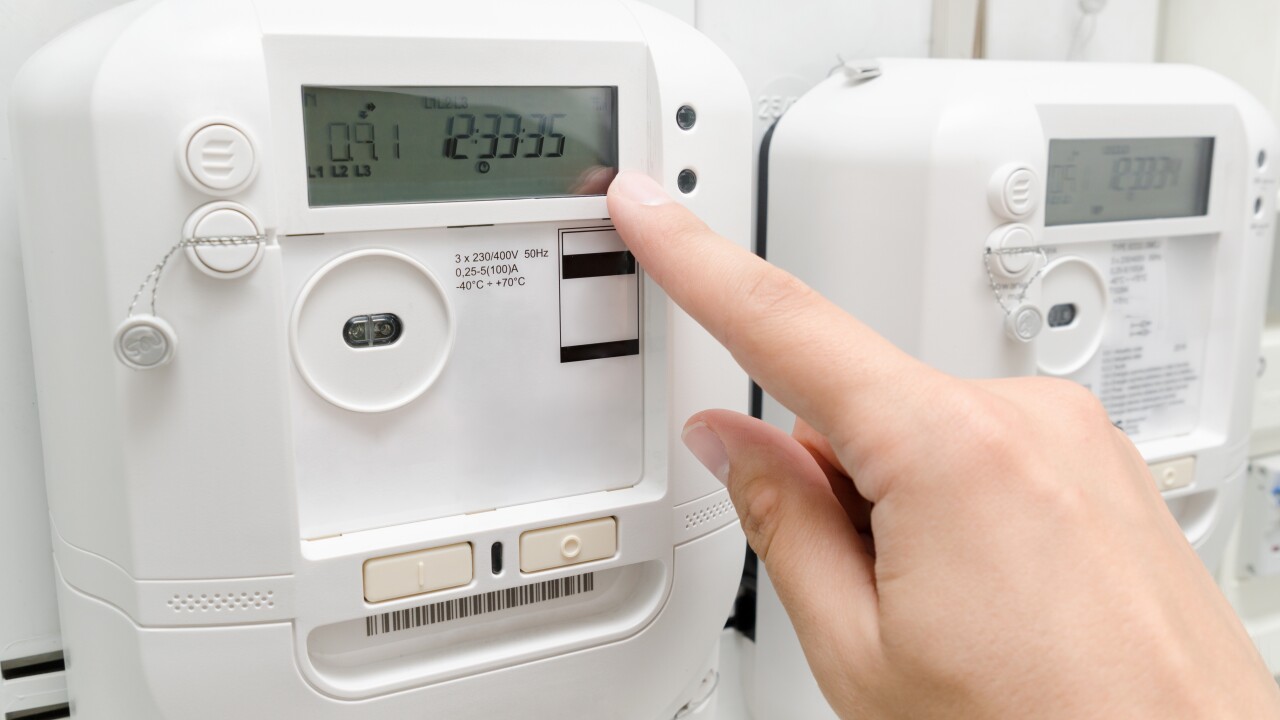
The securitization charge is starting from a low point, which represents about 1.9% of the total monthly electricity bill, while the ratepayer base is diverse and economically stable.
November 29 -

While Pagaya searches for a permanent successor, the company has named deputy CFO Evangelos Perros as interim CFO. Perros himself was named as deputy CFO in September 2023.
November 29 -

All of the class A notes have total hard credit enhancement levels of 22.35%, and notes have legal final maturity dates ranging from Nov. 15, 2024 through Dec. 15, 2032.
November 28 -

The notes benefit from subordination, overcollateralization, a reserve account and excess spread. Nelnet Servicing is also on the deal as a backup servicer.
November 27 -

Classes B, C, D and E benefit from credit enhancement levels amounting to 41.35%, 28.45%, 15.30% and 6.15%, and enhancements include a reserve account, excess spread and subordination.
November 22 -

The deal could be upsized to $1.3 billion in issuance, and benefit from several layers of credit enhancement, including a reserve fund, excess spread and overcollateralization.
November 22


