
But attorneys for the small Chicago-based mortgage company remained defiant and actually welcomed the Bureau's move.


-
Lenders are bracing for more companies to fall behind on their loan payments. That could create more opportunities for banks to dispose of these nonperforming credits through an Article 9 sale.
 April 7
-
The class A-2b tranche can issue floating-rate notes. Should that happen, the YSOA discount rate would step down from 10.30% to 10.05% after the class A-2 notes are paid off.
 April 6
-
The world's largest asset manager, often known for its close partnerships with government agencies, will market SVB and Signature Banks' former assets.
 April 6
-
Some concerns linger over the sector after Silicon Valley Bank's collapse last month. The most pressing worry now, analysts say, is not whether banks will survive but how much money they'll make in the coming months.
 April 5
-
Moody's had lowered the residual value loss a full percentage point, but did not mention whether it would lower the credit loss expectation.
April 5


-
The falloff in government-backed applications outpaced the overall decline, with volume down by over 8%, the Mortgage Bankers Association said.
 April 5
-
But attorneys for the small Chicago-based mortgage company remained defiant and actually welcomed the Bureau's move.
 April 4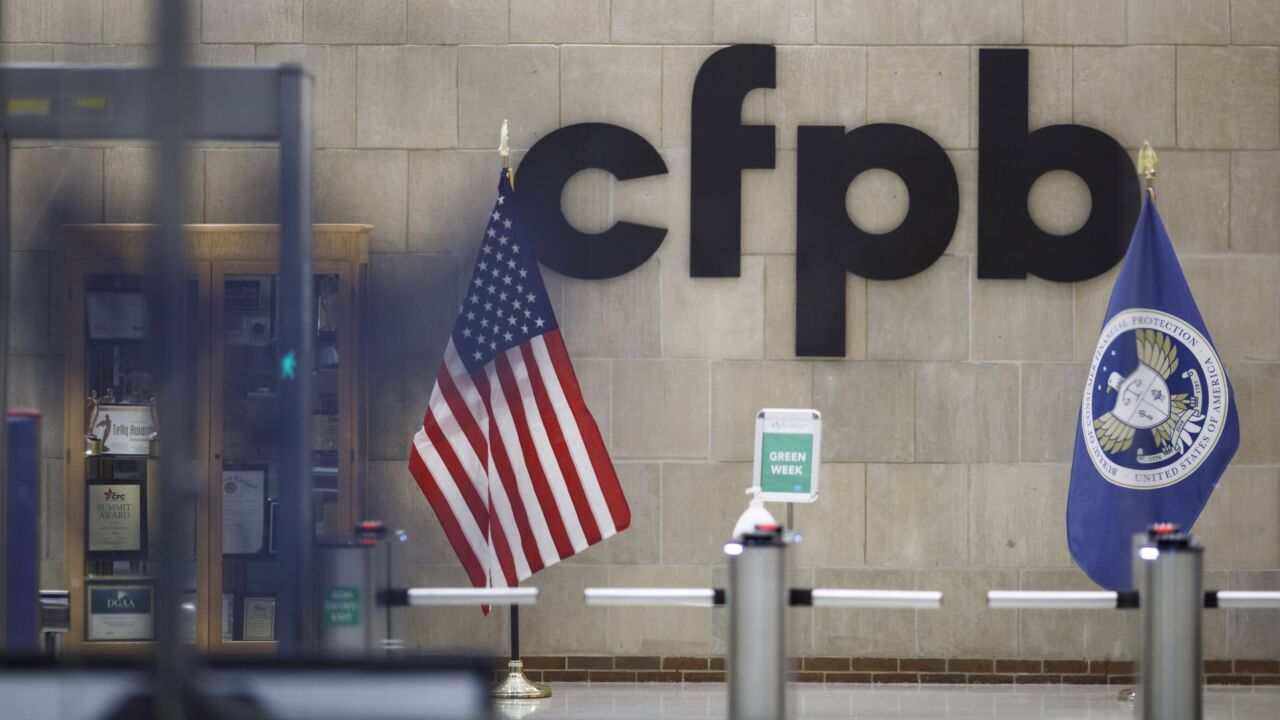
-
Executive compensation legislation could be one of the few areas of bipartisan agreement in Congress in the wake of the Silicon Valley Bank and Signature Bank failures.
 April 4
-
Initial hard credit enhancement for the class A notes is lower, at 37.30%, because of lower subordination in the deal.
April 4
-
As FDIC seeks a buyer for the remaining assets left after its sale of most of Signature Bank to Flagstar Bank, the agency has announced $60 billion in deposits — including some New York City commercial real-estate loans — will be on the market by this summer.
April 4
-
Despite some signs of weaker performance, metrics remain within manageable levels, and credit enhancement appears to be sound.
April 3
-
The Consumer Financial Protection Bureau issued a broad policy statement on what constitutes an "abusive" act or practice. Industry has long sought to narrow the definition.
 April 3


