-
Credit premiums remain subdued and downside protection across risky assets is still relatively cheap. Even the strain in market plumbing has been concentrated.
10h ago
-
The big three's trade group has said they operate legally and protect the industry with a trio of reports. FHFA also is opening up VantageScore for all lenders.
 September 4
-
If PAID 2026-REV1 doesn't breach any triggers, then the deal might pay an annual step-up premium representing 1.00% of each class's outstanding amount.
 September 4
-
The U.S. economy added 162,000 jobs in August, bouncing back from a surprise decline in July. The Fed's next interest rate decision will still hinge on next week's inflation reading.
 September 4
-
CHASE 2026-AGY2 also features a lock-out class and senior enhancement floor to manage potential tail risk and maintain credit support to the transaction.
September 3
-
At 2.5 million square feet, The Franklin has a NOI of $45 million and a rating agency cap rate of 9.75%.
September 3
-
Waller said he was "willing to support holding the policy rate at its current level" if inflation continued moving toward the Fed's 2% target.
September 3
-
She has advised borrowers and lenders on domestic and cross-border financing transactions across a broad range of asset classes, including trade receivables and commercial loans.
September 2
-
Merging Fannie Mae and Freddie Mac may not be possible but there is a variation that maintains competition and adds efficiency, according to one shareholder.
September 2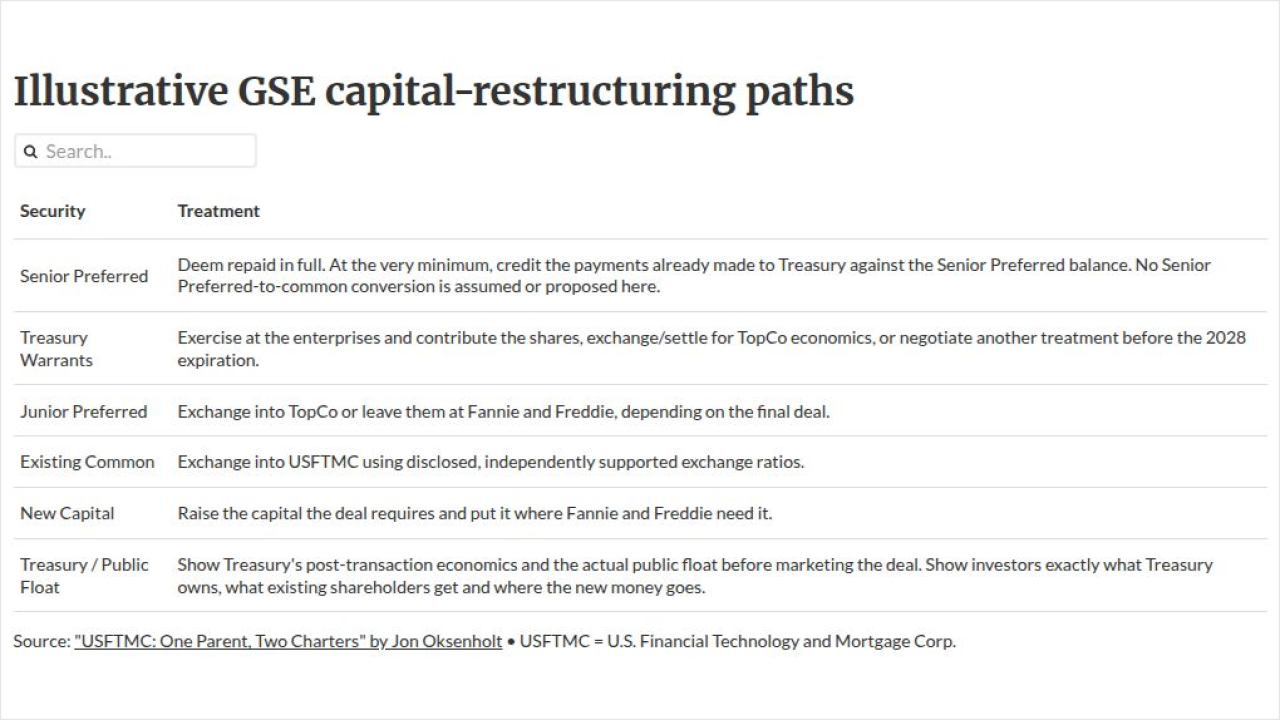
-
Most of the A1 tranches, are expected to pay a coupon of 5.83%, except for the A-1 last-cash flow tranche, which is expected to pay 5.93%.
September 2