-
Global trade is sinking while the pandemic interrupts international port and shipping activity. But securities backed by marine-cargo container fleets and leases have bombarded the securitization market this summer.
September 8
-
Deals, trends and research in structured finance and asset-backed securities for the week of Aug. 28-Sept.3
September 4
-
The captive-finance arm of General Motors is the first automotive lender this year to launch a securitization to finance inventories as dealerships rebound from COVID-19-related economic stresses.
September 3
-
The share of 78-month loans is at 14.9%, compared to approximately 10% in World Omni's previous issuance from its subprime/nonprime shelf.
September 2
-
This proposed Libor replacement is an imaginary, backward-looking benchmark dreamed up by the economists at the Fed with no discernible market.
September 2 Whalen Global Advisors LLC
 -
The Dallas-based chain was forced to advance additional principal payments on its asset-backed notes after trailing 12-month sales fell below $1.5B.
September 1
-
Arch's second CRT transaction this year to obtain indemnity reinsurance for mortgage-insurance premiums comes at a time it is also experiencing rising 60-plus-day delinquencies on its outstanding securitized pools.
August 31
-
Property-level insurance and funds fronted by servicers appear to mitigate the potential losses from damages and repairs in the Gulf Coast from the massive storm.
 August 28
-
The new reality for investors and originators accounts for forbearances and ability-to-repay.
 August 28
-
Although the 3.41% forbearance rate is down from two prior Navient refi deals, it remains far above what has been the low historical payment deferral and workout rate for its refinancing program for advanced-degree professionals.
August 27
-
Three non-QM deal issuers in August report varying levels of progress in moving borrowers from expired forbearance programs.
August 26
-
Commercial real estate deals have been in a deep freeze as lenders give borrowers slack to defer payments and landlords are reluctant to drop asking prices.
August 26
-
If it makes landfall as a Category 3 storm as was initially projected, damage from Hurricane Laura's surge could potentially devastate 432,810 residential properties in Texas and Louisiana, according to CoreLogic.
 August 25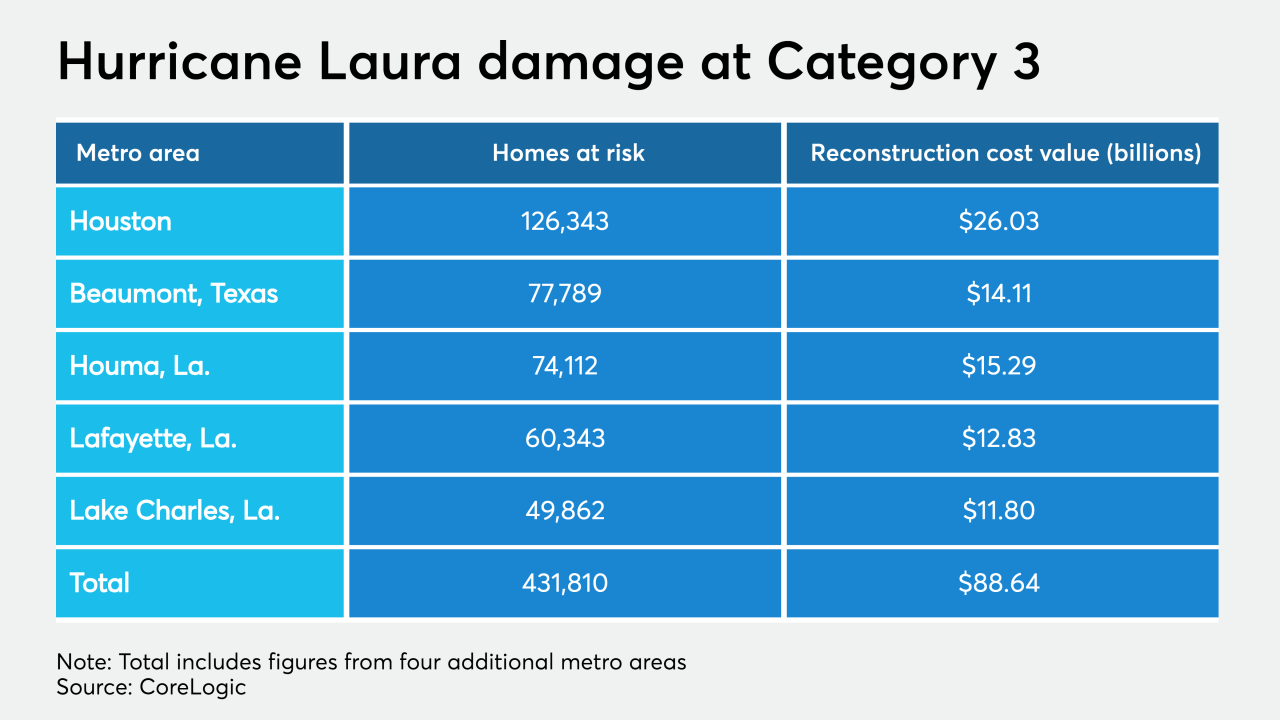
-
The $300 million transaction would be the fourth deal to price since early August, following more than a year's absence of activity in global shipping container securitizations.
August 25
-
The former SoFi chief’s latest startup, Figure, has created what it says is a transparent marketplace for buying and selling assets. Some banks have embraced the technology, but other blockchain projects have stalled because lenders don't want rivals to see their data.
 August 25
-
The transaction is the first in two years for MidCap, which provides startup and expansion financing for biosciences/healthcare and technology firms backed by VC and private equity.
August 24
-
While cutting losers to buy winners is an age-old investment proposition, the Covid-19 pandemic may create even more openings than the past crises that became bonanzas for real estate investors.
August 24
-
Stack Infrastructure has raised nearly $1.4B in the ABS market since last year to construct and manage build-to-suit "hyperscale" data centers, reportedly for tech giants like Amazon, Apple, Google and Microsoft.
August 23
-
JPMorgan Chase, which has an $18.4B prime auto-loan portfolio, has not ventured into the securitization market with publicly rated auto-loan collateral since 2006, according to ratings agency reports.
August 20
-
Banks and other lenders have found a way to potentially make billions of dollars from the coronavirus-fueled upheaval in the U.S. mortgage market — yet it risks burning bond investors in the process.
August 20


