
Regulation and compliance
Regulation
-

The departures of Bryan Schneider and Peggy Twohig come as the Biden administration's nominee to run the consumer bureau awaits Senate confirmation.
June 3 -

DMB Financial, a debt-settlement firm near Boston that operates in 24 states, agreed to pay $5.4 million in restitution to consumers for allegedly charging upfront fees before providing any service, the CFPB said.
May 17 -

Financial institutions said they needed more time to weigh in on issues such as how they use artificial intelligence for fraud prevention and underwriting.
May 17 -

Some worry the Senate’s rejection of the OCC rule hampers efforts to clarify legal standards for banks selling loans to fintechs.
May 12 -

Acting Comptroller of the Currency Michael Hsu said he plans to prioritize "solving urgent problems and addressing pressing issues" until the Biden administration selects a permanent head of the agency.
May 10 -

Critics say the regulation issued by the Office of the Comptroller Currency is a gift to predatory lenders. But the trade organizations warned lawmakers that invalidating it will make it difficult for the agency to create an improved framework in the future.
May 6 -

Cordray, named this week to lead the Education Department's office of federal student aid, cracked down on banks, student loan servicers and for-profit colleges when he was director of the Consumer Financial Protection Bureau.
May 4 -

Deals, trends and research in structured finance and asset-backed securities for the week of April 23-29
April 29 -
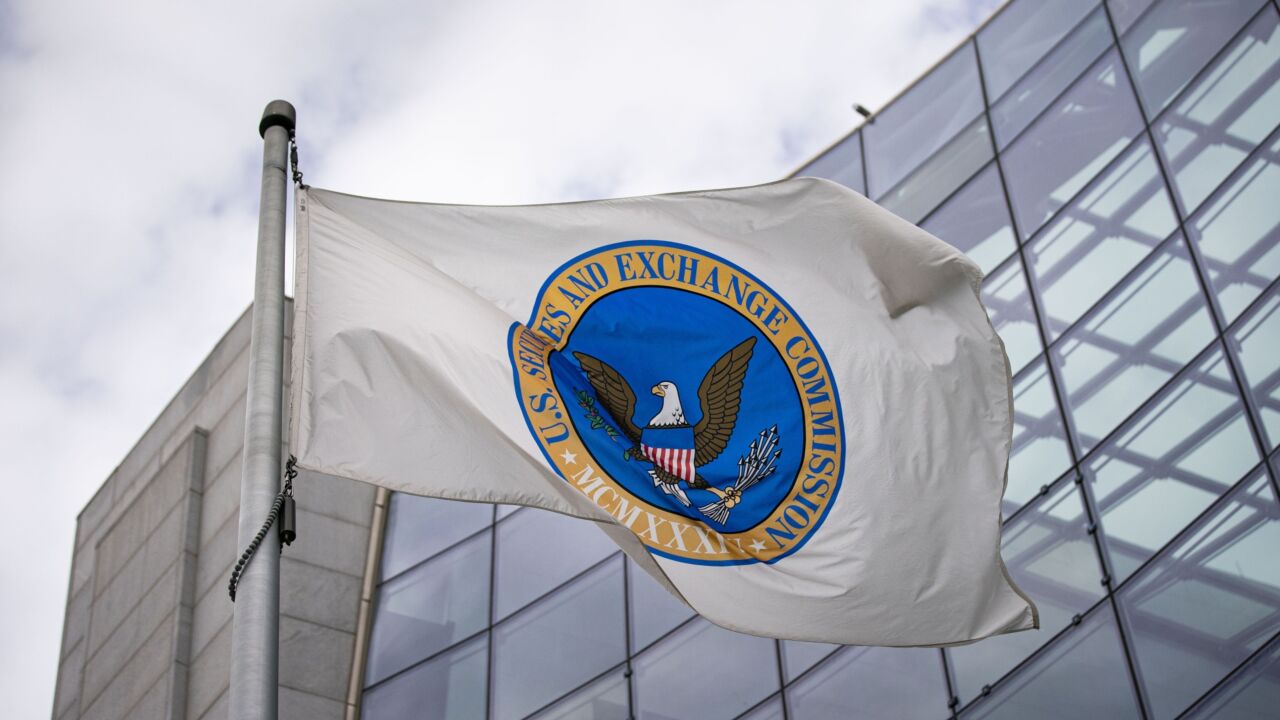
The Securities and Exchange Commission’s new enforcement chief abruptly resigned Wednesday, citing a complication in a case from her prior legal career, an early and significant setback in Chairman Gary Gensler’s tenure running the Wall Street regulator.
April 29 -

Three months into President Biden’s term, the White House has yet to select a nominee to run the Office of the Comptroller of the Currency or pick an acting chief. That inaction will make it more difficult for Democrats to unwind Trump-era policies, critics say.
April 23 -

The Consumer Financial Protection Bureau disputes a district court ruling that misconduct claims against the company were already covered by a previous settlement.
April 22 -

The Consumer Financial Protection Bureau's revocation of a Trump-era policy on abusive practices could mean higher fines and penalties for violators. But it still isn't clear what makes a practice abusive.
April 13 -

The agency announced it was rescinding seven policy statements issued last year meant to help companies combat fallout from COVID-19 but that the bureau's current chief said came at the expense of consumers.
March 31 -

The agency announced it was rescinding seven policy statements issued last year meant to help companies combat fallout from COVID-19 but that the bureau's current chief said came at the expense of consumers.
March 31 -

A recent statement by acting Director Dave Uejio is the clearest signal that the agency plans to revive strong underwriting standards that the Trump administration eliminated.
March 29 -

By purchasing additional assets and securities, the Federal Reserve provided the financial markets with enough liquidity to weather the pandemic recession. But with the economy starting to recover, it needs to reduce such funding before it creates dangerous bubbles over the long term, say two former bankers.
March 26 -

Deals, trends and research in structured finance and asset-backed securities for the week of March 19-25
March 25 -

Two banking bills signed by Gov. J.B. Pritzker carry implications for payday lenders, auto title lenders, credit unions and nonbank mortgage lenders. Pritzker, a Democrat, said the bills will address racial-equity gaps in the state.
March 23 -

In its final days, the Trump administration imposed limits on Fannie Mae and Freddie Mac’s holdings of mortgages with loan-to-value ratios above 90% and certain other characteristics. Critics say the changes were unnecessary and disproportionately penalize borrowers of color.
March 11 -

The agency's new leadership, which has already unwound numerous actions from the prior administration, said the January 2020 guidance implementing criteria for punishing firms that mistreat customers was “inconsistent with the bureau’s duty to enforce Congress’s standard.”
March 11


