

Donna M. Mitchell is a financial journalist based in the New York metro area with expertise covering structured finance, commercial real estate, and wealth management. Her work has appeared in Forbes, Next Avenue, Financial Planning and National Real Estate Investor.
-

The group is planting a flag for a new structured finance platform and real estate finance team in Miami and is expected to also strengthen Benesch's New York presence with two partners.
August 4 -

Notes are expected to pay coupons of 5.69% on the A1A notes and 5.89% on the A1B notes. Beyond that, the A2 and A3 notes pay coupons of 5.92% and 5.97%, respectively.
August 3 -

The guidance removes structural, compliance and cost barriers for certain operators who were used to doubling down on cautionary measures to ensure deal execution.
August 3 -

Structured as a master trust deal, AVCCT 2026-1 includes a three-year revolving period, when no principal payments will be made on the series 2026-1—unless an early amortization event happens.
July 31 -
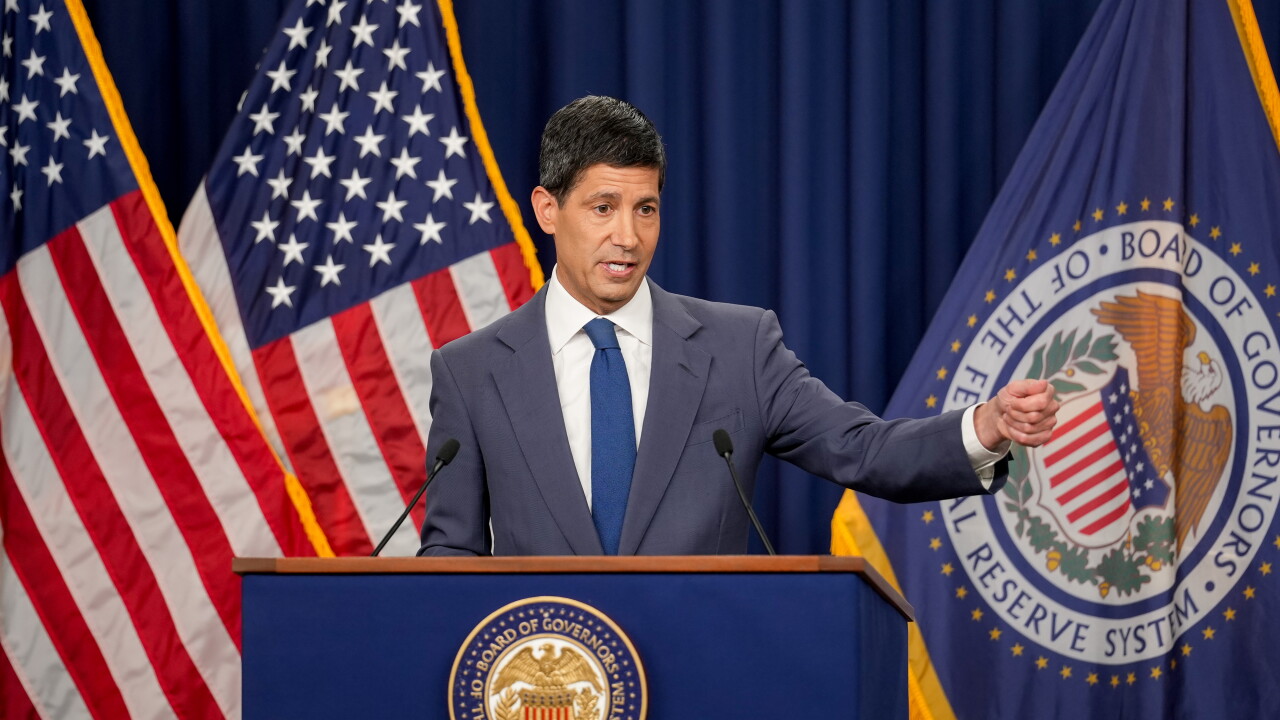
Some market participants are taking a 'hawkish hold' FOMC reading coming out of the July meeting, even as they adapt to a quieter intermeeting chairman.
July 30 -

Notes are expected to pay coupons of 4.05% on the notes rated R-1 (high) (sf) and 4.59% and 4.79% on the A1 and A2 notes, respectively.
July 29 -

A mix of underwriting methods were used on the asset pool, but alternative documentation took a larger portion than the rest, accounting for 35.5%.
July 28 -

The RMBS deal expects to pay coupons of 4.53% on the A1A through B4 notes, virtually all the notes in the capital structure.
July 27 -

Given Barnard's stature, and since the new leadership structure is not yet in place, Titan Square Mile said it would remove the funds from its Academy of Funds.
July 27 -

Equipment loans and leases that Redaptive Sustainability primarily acquired from originators, will back the asset pool.
July 24 -
Shareholders of XAI Floating Rate & Alternative Income should not support Octagon's removal as the fund's sub-adviser, Egan-Jones said, citing limited benefits to shareholders.
July 24 -

The rule 144A deal's structure includes a cash collateral account represents 1.00% of the note balance across all tranches.
July 23 -
The transaction will repay senior fees, principal and interest on the A1 class before repaying monthly interest on all remaining outstanding classes of notes.
July 22 -

Almost one third of borrowers in the pool, 26.3%, are self-employed, with a non-zero weighted average (WA) average income of $832,522, and $666,211 in liquid reserves.
July 21 -

The top 20 obligors account for 32.0% of the aggregate securitization value, while the top 10 represent 18.8%, a moderately elevated concentration.
July 21 -

Servicers of ACHM Trust 2026-HE1's underlying mortgages are also not required to forward any principal and interest advances on the mortgage loans they service.
July 21 -

SLR series 2026-1 benefits from initial overcollateralization of 8.00%, with a target of either 13% of the pool's aggregate ABS value or 8.00% of the securitization value on May 31.
July 20 -

Most of the waterfall will repay fees and interest, and any deficit or default amounts, until an early amortization event occurs.
July 17 -

Raising $508.6 million, and being the first to cross the half-trillion dollar mark, the Point 2026-2 series also drove down funding costs by more than 220 basis points.
July 16 -

The private asset-backed finance capital from Oaktree is complimentary to Temple View's public ABS program.
July 16


