-
Following its deadline for written comments on the topic last month, the Federal Housing Finance Agency is scheduling events that will focus on two key themes emerging in responses.
September 1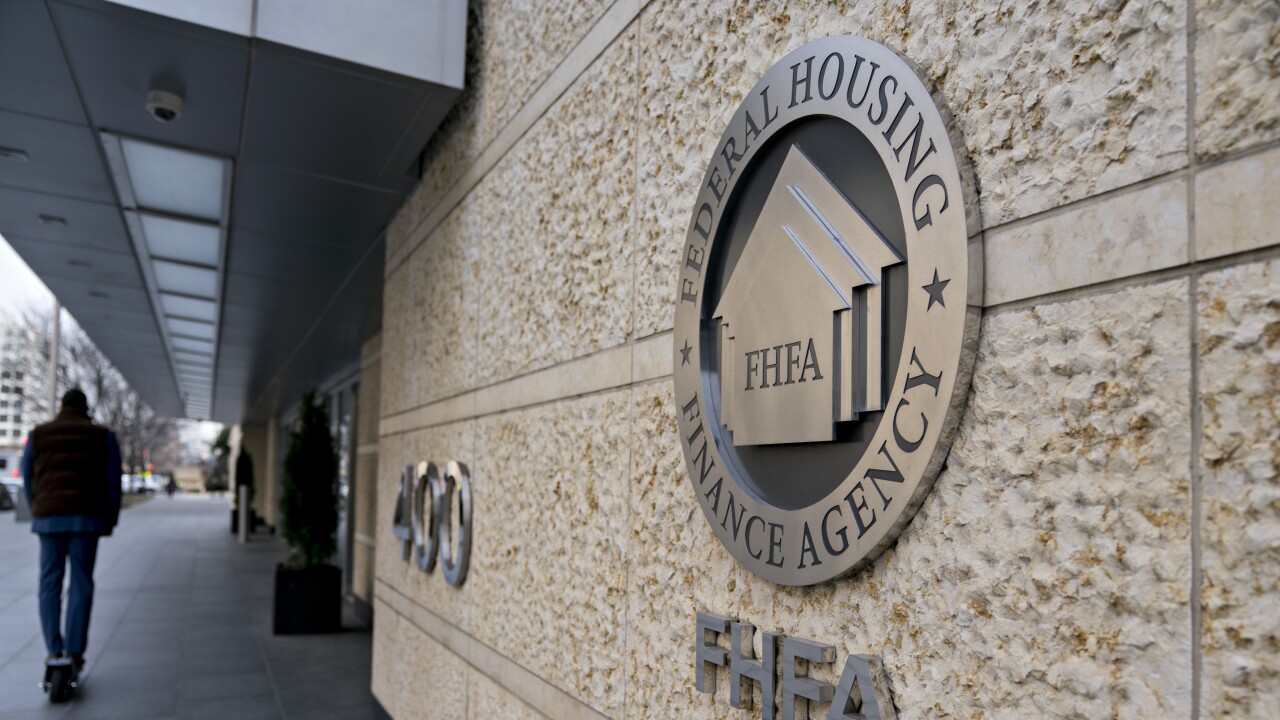
-
The mortgage giants were criticized earlier this month for a plan to charge an "adverse market fee" to protect against losses resulting from the pandemic.
August 25
-
If Trump is reelected, his administration would likely move forward with privatizing Fannie Mae and Freddie Mac and relaxing key rules, while a Joe Biden presidency would likely try to expand homeownership access and borrower protections.
August 24
-
The new “adverse market fee” for refinanced mortgages resembles steps the companies took to combat the 2008 mortgage crisis. But critics charge it isn’t necessary and will hurt borrowers’ ability to tap into low rates.
August 13
-
In a letter to the Consumer Financial Protection Bureau, the Mortgage Bankers Association recommended adding six more months to the latest GSE patch proposal.
August 12
-
A second-term Trump administration would likely continue its deregulatory efforts, focus on Fannie Mae and Freddie Mac's exit from conservatorship, and seek to facilitate fintech participation in the banking system.
August 11
-
From affordable housing policy to GSE conservatorship, the next president will wield a heavy influence on mortgage and housing policies.
July 17
-
A recent ruling declaring the Consumer Financial Protection Bureau’s structure unconstitutional signaled that a similar outcome awaits the Federal Housing Finance Agency. But the FHFA will argue in a new case that it does not deserve the same fate.
July 14
-
Guarantee fees became the main source of revenue for government-sponsored enterprises during conservatorship, and reverting to a private stockholder model could create a need for more revenue.
July 6
-
Legal experts say it is now more likely that the Supreme Court will strike down the single-director governance framework for Fannie Mae and Freddie Mac’s regulator.
July 2
-
In a letter to Director Mark Calabria, 17 organizations requested an additional 60 days to weigh in on the proposal meant to strengthen Fannie Mae and Freddie Mac's balance sheets post-conservatorship.
July 1
-
The Supreme Court threw out a key statutory provision concerning the agency’s leadership structure, but the presidential election and possible legislative reforms could bring about more changes to the embattled bureau.
June 29
-
Whatever path Fannie Mae and Freddie Mac take, the Mortgage Bankers Association would like to see them preserve many of the changes they made while in government conservatorship.
June 23
-
The Consumer Financial Protection Bureau plans to change the definition of what constitutes a qualified mortgage from a 43% debt-to-income limit to a price-based threshold, and further extend a temporary exemption given to Fannie Mae and Freddie Mac.
June 22
-
As they prepare to exit government conservatorship, Fannie Mae and Freddie Mac have enlisted the investment banks to help them boost capital and evaluate market opportunities.
June 15
-
The FHFA’s proposal is intended to strengthen Fannie Mae and Freddie Mac, but many experts warn that it could boost guarantee fees for lenders that they say may be passed on to borrowers.
June 8
-
Some observers wonder if proposed regulatory targets for Fannie Mae and Freddie Mac will stoke concerns about low shareholder returns. But others suggest those fears are unfounded.
May 25
-
The much-anticipated proposal, which would not go into effect until after Fannie Mae and Freddie Mac are privatized, reflects Director Mark Calabria’s aggressive efforts to get the companies on a strong financial footing.
May 20
-
Director Mark Calabria, who abandoned the Fannie and Freddie capital proposal written by his predecessor, said he expects a revised framework to be ready “very soon.”
May 19
-
The two mortgage giants said they would begin the process of hiring outside firms to help raise capital that will be needed to exit conservatorship.
May 18


