-
A provision in the original Senate tax reform bill would have required companies acquiring mortgage servicing rights to pay taxes upfront for their anticipated servicing income.
 December 1
-
The financial services industry has cheered a proposed reduction in the corporate tax rate, but a lower rate could force Fannie Mae and Freddie Mac to write down assets, increasing the odds that the companies will need Treasury support.
November 29
-
New Residential Investment Corp. is planning to purchase Shellpoint Partners in the first half of next year for $190 million with an additional earn-out over the next three years.
 November 29
-
Conforming loan limits for mortgages bought by Fannie Mae and Freddie Mac will increase for the second consecutive year in response to the rapid rise in home prices, the Federal Housing Finance Agency said.
 November 28
-
The FHFA is allowing Fannie Mae and Freddie Mac to invest in the credits for the first time since they entered conservatorship. Its purpose is to promote affordable housing in underserved markets.
November 16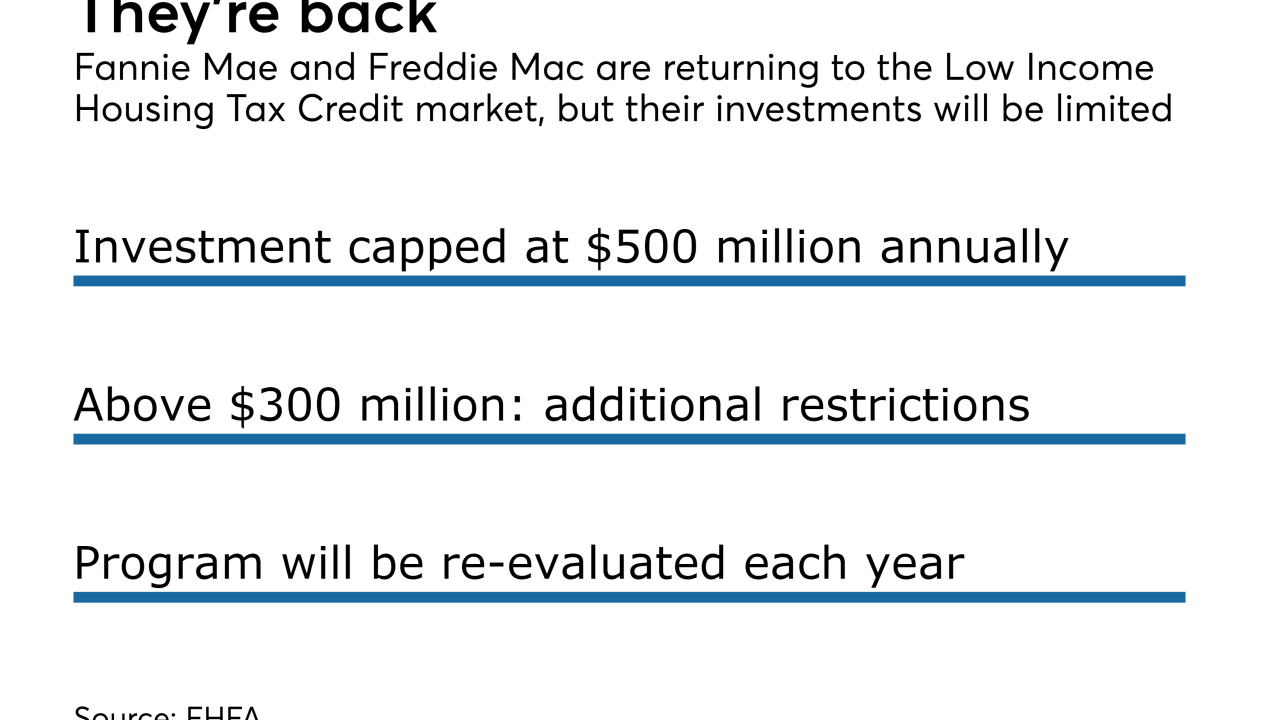
-
Benefit Street Partners is securitizing 20 short-term commercial real estate loans it originated or acquired for transitional properties currently with unstable cash flow.
November 15
-
A bill that would ease Basel III capital requirements on commercial real estate loans could level the playing field between depository and nonbank lenders and spur more construction lending if it passes in the Senate.
 November 10
-
Hopes that tax reform might soften a weakening of the mortgage interest deduction were quickly dashed as the GOP plan landed a double punch on the incentive cherished by the mortgage and housing industries.
November 2
-
Mark Calabria, the chief economic adviser to Vice President Mike Pence, said the administration is focused for now on more pressing issues than GSE reform, including addressing housing damage from recent hurricanes.
November 1
-
Commercial and multifamily originations are projected to surpass the 2007 market peak this year, according to the Mortgage Bankers Association.
October 27
-
The captive finance arm of General Motors has been pulling back on leasing, but it still expects to be negatively impacted by falling used car prices for the remainder of the year.
October 24
-
The CFPB's practice of "regulation by enforcement" forces mortgage companies to develop compliance standards based on the mistakes of their peers, rather than clear guidance from the enforcement agency, said David Motley, the new chairman of the Mortgage Bankers Association.
October 23
-
With online retailers beginning to challenge the dominance of brick-and-mortar grocery stores, CRE loans to strip mails anchored by them look riskier.
 October 20
-
Called Structured Agency Credit Risk Securitized Participation Interests, the new securities are backed by mortgage loans, and are not general obligations of the government-sponsored enterprise.
 October 18
-
Many of the prime jumbo loans backing the transaction, JP Morgan 2017-4, were contributed by originators with limited history in that product, according to DBRS.
October 18
-
Student loan platform Social Finance has withdrawn its application for deposit insurance, a month after former CEO Mike Cagney retired in the wake of sexual harassment allegations.
October 13
-
After downgrading Deutsche's issuer default ratings last week, the rating agency now wants the German lender to post additional collateral to be considered an eligible swaps counterparty.
October 4
-
The majority of borrowers impacted by Hurricane Harvey have a significant amount of equity, while many in Hurricane Irma disaster areas have limited or negative equity, according to Black Knight Financial Services.
October 2
-
Mortgage investors want Freddie Mac to align its policy with Fannie Mae's when it comes to how delinquencies related to Hurricane Harvey affect credit risk transfer deals.
September 19
-
The Terrorism Risk Insurance Act was created after 9/11 to serve as a crucial federal backstop for commercial real estate insurers, but an analysis of alternatives to fund the program reveals the continued challenges of measuring and predicting terror risk.
September 11


