
Wells Fargo
Wells Fargo


Wells Fargo is one of the largest banks in the United States, with approximately $1.9 trillion in balance sheet assets. The company is split into four primary segments: consumer banking, commercial banking, corporate and investment banking, and wealth and investment management.
-

The underlying assets have an original weighted average CLTV ratio of 70.4%. Assets with original CLTV ratios exceeding 80% represent 26.1% of the pool's balance.
November 13 -
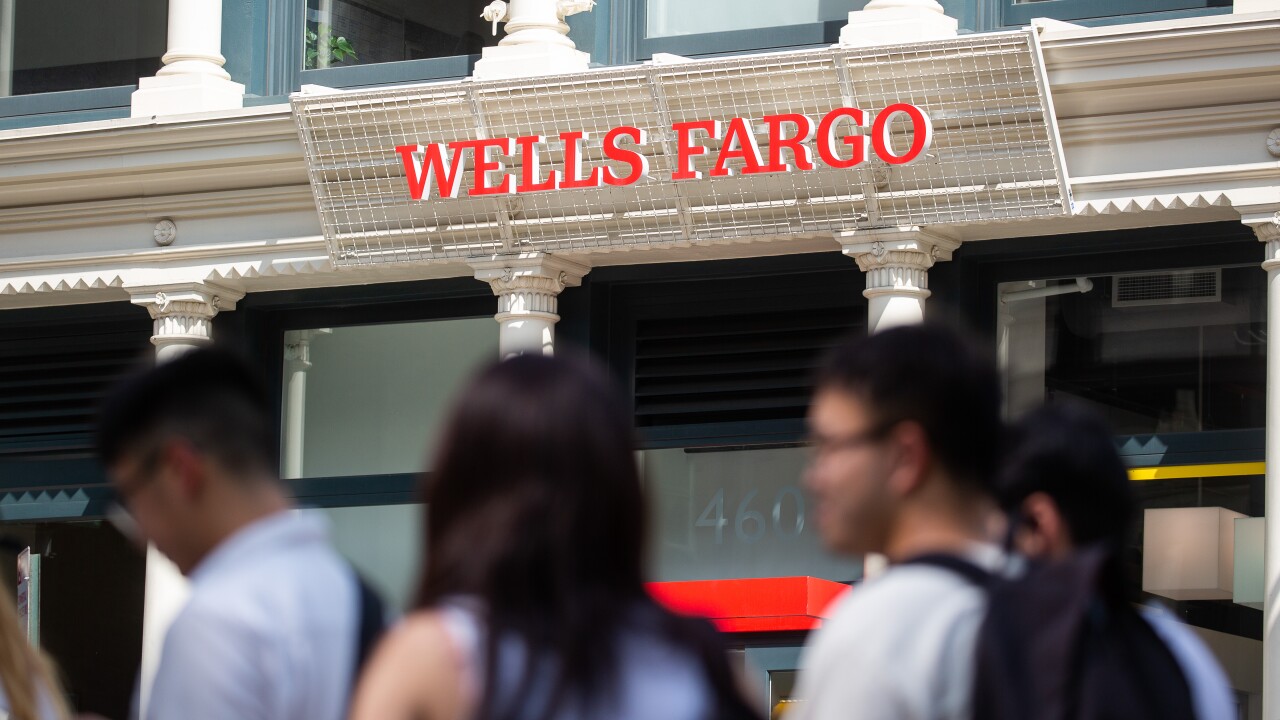
The megabank's scale hasn't made it immune from the deposit wars that have crimped bank profits. But the "stabilization" that Wells Fargo flagged is a positive sign as other banks start reporting earnings.
October 11 -

The collateral has subprime credit attributes, the credit quality of the Westlake 2024-3 pool was incrementally better than the 2024-2 transaction, and notably better than the 2023-4 deal.
October 3 -

For one, the deal is expected to include only Japanese foreign obligors—historically strong and comparable to U.S. obligors—from the pool of 9,333 loans.
September 27 -

Since 2019, the portfolio has recorded five defaults—driven by bankruptcies—and each was resolved with a 100% recovery rate, Fitch said.
August 29 -

Known at BLAST 2024-3, the deal will issue five classes of notes with subprime auto loans serving as collateral, even if the pool is upsized to $680 million.
July 12 -

An independent third-party company will provide the primary servicing, and the industry and equipment diversification levels are strong in the pool.
May 16 -

Formerly of Wells Fargo, she will coordinate several key units to create a structure for a sustained capital markets program that capitalizes on recent innovation and growth in home equity finance.
April 17 -

First-quarter results at the companies were promising for other banks looking to reel in fees from capital markets activities as deposit costs put pressure on net interest income.
April 12 -

The weighted average (WA) credit line was $10,874, which Moody's said is low relative to other large card issuers, and in fact 69.5% of the pool has a credit limit of $10,000 or more.
March 5 -

The portfolio of new auto leases will support notes with an expected base case loss proxy of 1.0%.
January 29 -

A substantial majority of obligors have investment-grade credit qualities and that, payments from the U.S. government account for the largest concentration, 26.75%.
January 19 -
-

Classes A, B and C benefit from hard credit enhancement levels of 60.80%, 42.80% and 24.57%, respectively, an increase from the comparison deal.
December 8 -

The underlying mortgage is a two-year, floating-rate commercial mortgage loan that is slated to mature on Dec. 9, 2025, and the loan has three one-year extension options.
December 6 -

The company is coming off of a recent period of performance improvements, with gains in net income, cash and cash equivalents.
November 16 -

The A1 and A2 notes, the two senior notes in the payment priority, have the same level of total hard credit enhancement, 17.6%.
November 2 -

The transaction could be upsized to $1.25 billion, from $1 billion, but the 4.00% overcollateralization level is expected to remain constant through the life of the deal.
October 23 -

Slated to close by September 29, the deal has total initial hard credit enhancement that amounts to 87.7% on the most senior class of notes.
September 22 -

Total hard credit enhancement of 37.45% shore up the class A notes, according to Moody's. In the rest of the deal the classes B, C and D notes benefit from total hard credit enhancement of 33.1%, 23.7% and 13.7%, respectively.
September 22


