-
For the first time since June 7, the number of loans going into coronavirus-related forbearance didn't decrease from the week before, according to the Mortgage Bankers Association.
 August 31
-
Arch's second CRT transaction this year to obtain indemnity reinsurance for mortgage-insurance premiums comes at a time it is also experiencing rising 60-plus-day delinquencies on its outstanding securitized pools.
August 31
-
Both the Federal Housing Finance Agency and Federal Housing Administration are extending relief for homeowners and renters due to the pandemic crisis.
August 27
-
The mortgage giants were criticized earlier this month for a plan to charge an "adverse market fee" to protect against losses resulting from the pandemic.
August 25
-
If Trump is reelected, his administration would likely move forward with privatizing Fannie Mae and Freddie Mac and relaxing key rules, while a Joe Biden presidency would likely try to expand homeownership access and borrower protections.
August 24
-
There were questions about the GSEs' use of structured credit risk transfers in the single-family market given an earlier pandemic-related market disruption.
 August 21
-
Lenders initially won't be able to pass on the cost of the Federal Housing Finance Agency's "adverse market fee" to borrowers whose rates on GSE-backed mortgages and refinances are already locked in.
August 20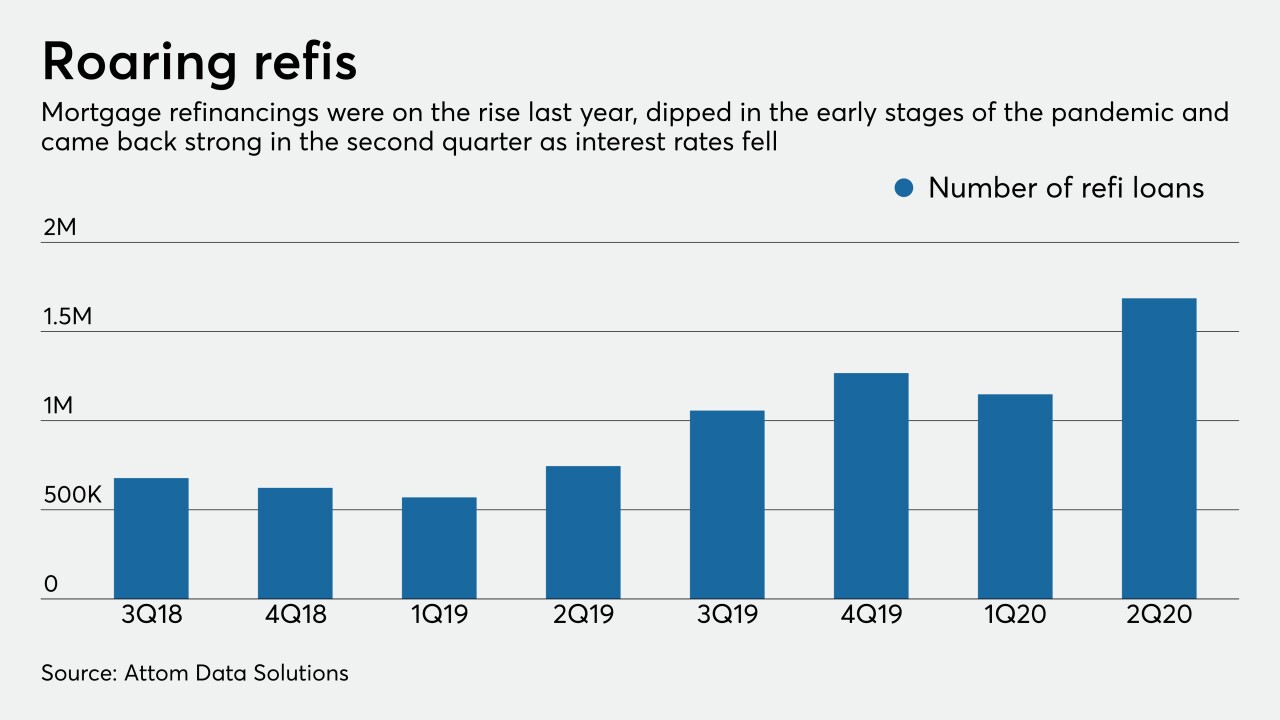
-
The new “adverse market fee” for refinanced mortgages resembles steps the companies took to combat the 2008 mortgage crisis. But critics charge it isn’t necessary and will hurt borrowers’ ability to tap into low rates.
August 13
-
The agency said property owners can enter into new or modified forbearance plans if they have a hardship due to the coronavirus, but the landlords must agree not to kick out renters solely for nonpayment of rent.
 August 6
-
The mortgage giants will have to meet benchmarks for covering cash flow needs during stressed periods. The FHFA views the requirements as a prerequisite to the companies exiting conservatorship.
July 31
-
Fannie Mae and Freddie Mac have imposed heavy price adjustments for loans that were granted relief under the pandemic relief law enacted in March.
 July 22
-
The Federal Housing Finance Agency will extend the same GSE benchmarks of the past three years into 2021.
July 20
-
A recent ruling declaring the Consumer Financial Protection Bureau’s structure unconstitutional signaled that a similar outcome awaits the Federal Housing Finance Agency. But the FHFA will argue in a new case that it does not deserve the same fate.
July 14
-
The council created by the Dodd-Frank Act to identify systemic risks launched a review of the market as part of an activities-based approach that shifts focus away from targeting individual firms.
July 14
-
The high court ruled June 29 that the structure of the Consumer Financial Protection Bureau violated the separation of powers.
July 9
-
A bond market once thought to be key to the futures of Fannie Mae and Freddie Mac — and the roughly $5 trillion of home loans they backstop — could instead find itself on the scrap heap due to their own regulator.
July 8
-
Legal experts say it is now more likely that the Supreme Court will strike down the single-director governance framework for Fannie Mae and Freddie Mac’s regulator.
July 2
-
In a letter to Director Mark Calabria, 17 organizations requested an additional 60 days to weigh in on the proposal meant to strengthen Fannie Mae and Freddie Mac's balance sheets post-conservatorship.
July 1
-
Multifamily borrowers with loans from Fannie Mae and Freddie Mac will get an extended break for coronavirus-related hardships if they continue to give their tenants relief as well.
June 30
-
Nonbank servicers have been seeking more sources of cash since the coronavirus disrupted markets and elevated forbearance rates. These are some strategies they may be able to use.
June 26


